
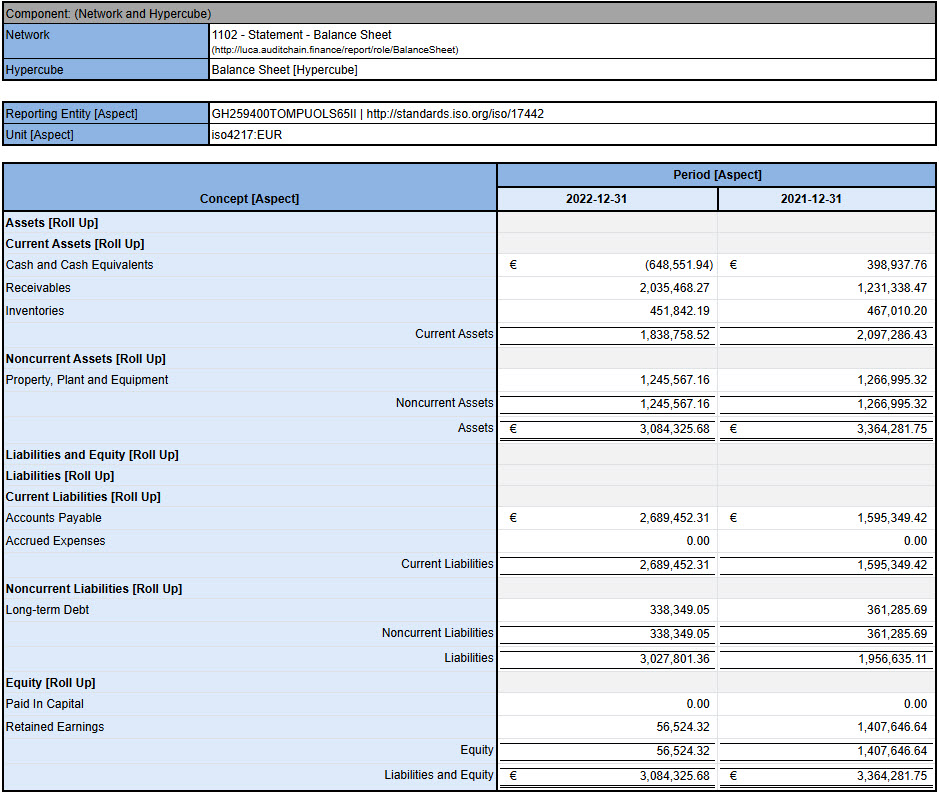
If a profit and loss statement is the story of how a business performed over a year, the balance sheet is a photograph of where it stands right now. It is one of the core financial statements, yet the word alone is enough to make many people switch off. It need not. A balance sheet rests on one simple idea and three plain-English parts. This guide explains all of them so you can read a balance sheet with confidence. This is general information, not accounting advice.
What a balance sheet is
A balance sheet is a snapshot of what a business owns and what it owes at a single point in time — typically the last day of a month, quarter or financial year. Unlike a profit and loss statement, which covers a period, the balance sheet captures a single moment.
It answers two questions at once: what does the business have, and where did the money to fund it come from? The answer is organised into three sections — assets, liabilities and equity — connected by an equation that always holds true.
A profit and loss statement is a video of how the business performed over the year. A balance sheet is a still photo of its financial position on one specific day.
The three building blocks
Everything on a balance sheet falls into one of three categories.
Assets — what the business owns. Anything of value the business controls. Assets are usually split into:
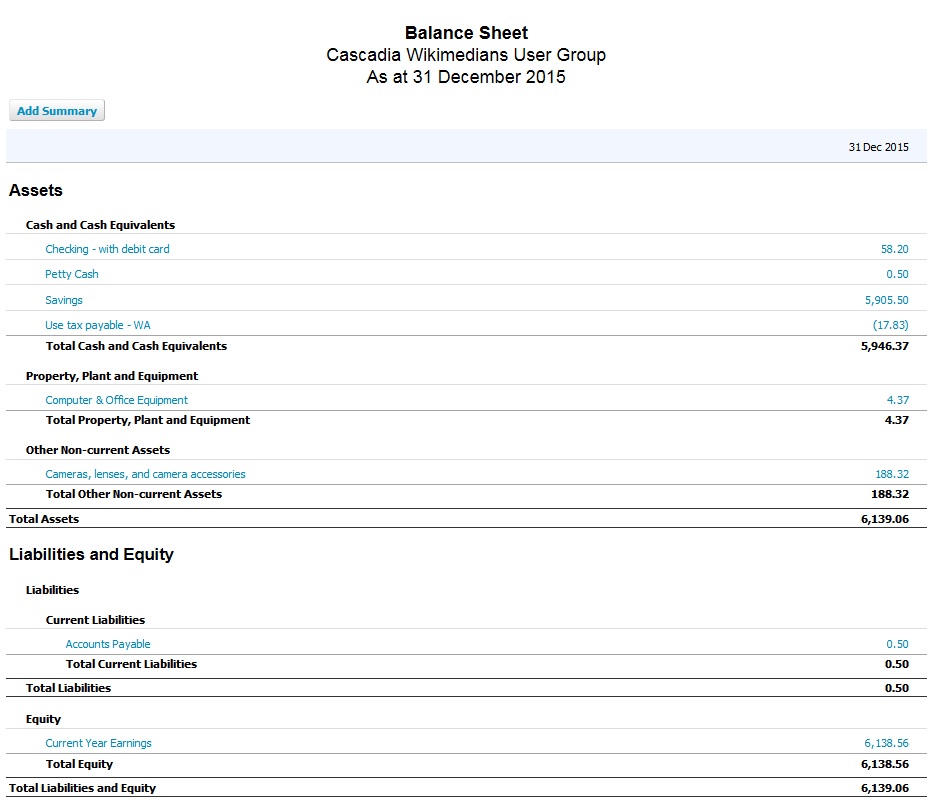
- Current assets — things that are cash or will become cash within about a year: the bank balance, money customers owe you (receivables), and stock.
- Non-current (fixed) assets — longer-term things: equipment, vehicles, property, and intangibles like patents or goodwill.
Liabilities — what the business owes. Money owed to others. Also split by timing:
- Current liabilities — due within a year: supplier bills, short-term loans, tax owed.
- Non-current liabilities — due further out: long-term loans, for example.
Equity — the owners' share. What is left for the owners once you subtract liabilities from assets. It typically includes money the owners put in plus profits the business has retained over time rather than paid out.
| Section | What it represents | Examples |
|---|---|---|
| Assets | What you own | Cash, stock, equipment, money owed to you |
| Liabilities | What you owe | Supplier bills, loans, tax due |
| Equity | The owners' stake | Capital invested, retained profits |
Why the two sides always balance
The balance sheet gets its name because it always balances, thanks to one equation:
Assets = Liabilities + Equity
The logic is intuitive once you see it. Everything a business owns had to be paid for somehow — and there are only two sources of funding: money it borrowed or owes (liabilities) and money the owners provided or left in (equity). So the total value of what you own must equal the total of how it was funded.
This is the foundation of double-entry accounting: every transaction affects at least two figures so the equation stays in balance. Buy a 10,000-pound van with a loan, and assets rise by 10,000 (the van) while liabilities rise by 10,000 (the loan). Buy it with cash, and one asset (cash) falls while another (the van) rises. Either way, the sheet still balances. If it does not balance, something has been recorded wrongly.
How to read a balance sheet
The real value of a balance sheet is what it reveals about financial health. A few things to look at:
- Liquidity — can it pay its bills? Compare current assets to current liabilities. The difference is working capital; comfortably positive working capital suggests the business can meet short-term obligations, which connects directly to day-to-day cash flow management.
- How much debt is used. Compare total liabilities to equity. Heavy reliance on borrowing can mean higher risk and bigger repayments to service.
- The owners' stake. Growing equity over time — especially retained profits — generally signals a business that is building value rather than just standing still.
- The make-up of assets. A lot of value tied up in unsold stock or unpaid invoices is not the same as cash in the bank.
Reading these together gives a feel for whether a business is solid, stretched or somewhere in between. It pairs naturally with understanding the difference between sole traders and limited companies, since a limited company must prepare and (in summary form) publicly file a balance sheet, while a sole trader's position is more private. And when you are building the financial side of a business case, knowing how an investment will land on the balance sheet — as an asset, a liability, or both — sharpens the argument.
Common misunderstandings
A few points trip people up:
- A balance sheet is not the same as the bank balance. Cash is just one line. A business can show healthy equity yet be low on cash, or sit on cash while carrying large debts.
- "Balancing" does not mean "healthy." Every correct balance sheet balances by design. Balancing tells you the bookkeeping adds up, not that the business is thriving.
- Asset values are not always market values. Many assets are recorded at cost (sometimes reduced over time), which may differ from what they would fetch if sold.
- It is a snapshot, not a trend. One balance sheet shows a single day. Comparing several over time reveals whether the position is improving or worsening — often more useful than any single sheet.
The bottom line
A balance sheet is a snapshot of what a business owns and owes on a particular day, organised into assets, liabilities and equity. Its defining feature is the equation that always holds — assets equal liabilities plus equity — because everything a business owns is funded either by what it owes or by its owners. Read it for liquidity, debt levels and the owners' stake, remember that balancing is not the same as being healthy, and compare sheets over time. Grasp those basics and the balance sheet stops being intimidating and starts being genuinely useful.
Frequently asked questions
What are the three parts of a balance sheet?
Assets (what the business owns or is owed), liabilities (what it owes to others), and equity (the owners' share, equal to assets minus liabilities). The three are linked by the equation assets equal liabilities plus equity.
Why does a balance sheet balance?
Because of double-entry accounting: everything a business owns was funded either by money it owes (liabilities) or by the owners (equity). So total assets always equal total liabilities plus equity by definition. This is general information, not accounting advice.
What is the difference between a balance sheet and a profit and loss statement?
A balance sheet is a snapshot at one moment showing what you own and owe. A profit and loss statement covers a period and shows income, costs and profit. One is a still photo; the other is a video of performance over time.
What does 'working capital' mean on a balance sheet?
Working capital is current assets minus current liabilities — roughly, the short-term money available to run the business. Positive working capital suggests you can cover near-term obligations; negative working capital can be a warning sign.



Join in — free. Comments on Daily Junction are for members, so real names stay rare and bots stay out.
One field. We email you a 6-digit code — no password needed. Your comment is kept while you do it.
Under 13? You’ll need a parent’s OK first — it takes them one click.