
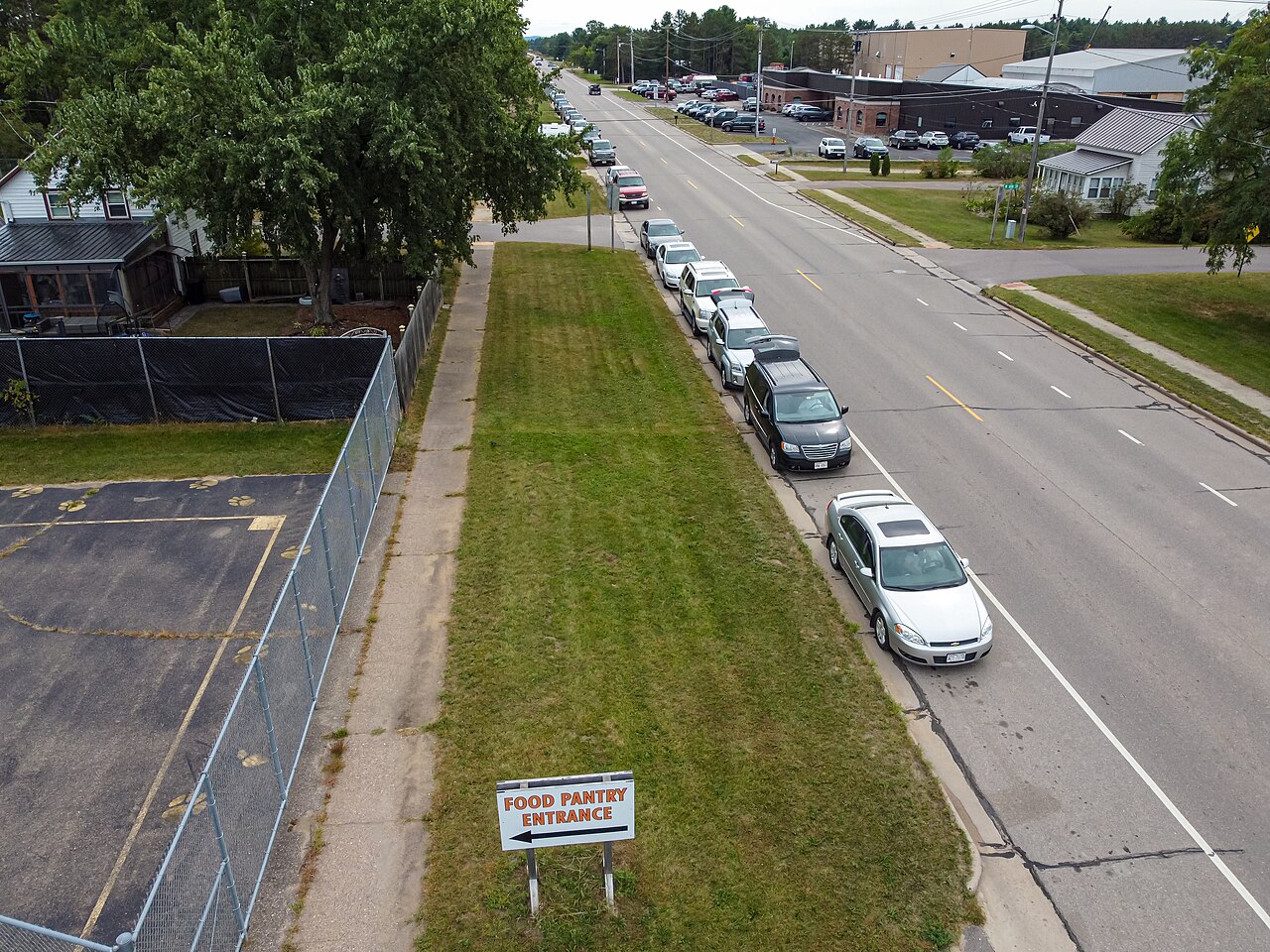
Food bank usage in the UK has reached a record high, a grim milestone that exposes the depth of the cost-of-living crisis and the failure of the social safety net to protect the most vulnerable. The Trussell Trust, the UK's largest food bank network, distributed 3.1 million emergency food parcels in the 2023-24 financial year, a 16% increase from the previous year and the highest number since the charity began tracking data in 2008.
1.1 million parcels went to children, meaning that over one million children in the UK relied on charitable food aid at some point during the year. This is not a story of the unemployed or the workless. 37% of food bank users are in working families, where wages are too low to cover the rising cost of food, energy, and housing. This is a story of a social contract that has broken down, leaving millions of people—including those who work full-time—unable to afford to eat.
The numbers are staggering, but they understate the scale of the crisis. The Trussell Trust operates around 1,300 food banks, but there are an estimated 1,100 independent food banks outside the network. The Independent Food Aid Network (IFAN) estimates these distributed an additional 1.5 million parcels in 2023-24, bringing the total to 4.6 million. In a country of 68 million people, this means roughly one in fifteen people used a food bank in the past year.
This is not normal. This is not acceptable. And it is getting worse.
The scale of the crisis
The Trussell Trust's data, published in April 2024, shows a relentless upward trend:
- 2008-09: 26,000 food parcels distributed (the year the Trussell Trust began tracking)
- 2013-14: 913,000 parcels (following austerity cuts and benefit reforms)
- 2019-20: 1.9 million parcels (pre-pandemic)
- 2020-21: 2.5 million parcels (pandemic peak)
- 2022-23: 2.99 million parcels (cost-of-living crisis begins)
- 2023-24: 3.1 million parcels (new record)
The increase is not slowing. Between April 2023 and March 2024, food bank usage rose 16% year-on-year, driven by soaring food prices, frozen benefits, and the ongoing cost-of-living crisis. The Trussell Trust warns that without urgent government action, usage could reach 4 million parcels by 2025.
The distribution is uneven. Food bank usage is highest in:
- North East England (5.8% of the population used a food bank in 2023-24)
- Wales (5.2%)
- North West England (4.9%)
- Scotland (4.1%)
It is lowest in London (3.1%) and the South East (2.8%), though usage in these regions is still at record highs. The pattern reflects regional inequality: areas with higher unemployment, lower wages, and weaker social infrastructure have higher food bank usage.
Who uses food banks and why?
The stereotype of the food bank user—unemployed, chaotic, unable to manage money—is wrong. The reality is far more complex and far more damning of the systems that are supposed to prevent destitution.
37% of food bank users are in working families. They have jobs, often full-time, but their wages are too low to cover the rising cost of food, energy, and housing. The National Living Wage (£11.44 per hour in 2024) is below the real Living Wage calculated by the Living Wage Foundation (£12.00 per hour, £13.15 in London). A full-time worker on the National Living Wage earns £22,370 per year before tax—barely enough to support a single person, let alone a family.
28% are disabled or have a disabled family member. Disabled people face higher living costs (e.g., heating, mobility aids, special diets) and are more likely to experience benefit delays, sanctions, or reassessments that cut or suspend income. The shift from Disability Living Allowance to Personal Independence Payment has been particularly brutal, with many disabled people losing support after reassessment.
19% are single parents, struggling with childcare costs, inadequate child benefit, and the two-child benefit cap, which denies support for third or subsequent children born after April 2017.
16% are unemployed or waiting for benefits, often caught in the five-week wait for Universal Credit, which leaves new claimants without income for over a month. Many are sanctioned—their benefits stopped for alleged non-compliance with job search requirements—leaving them with no income at all.
The common thread is income shock: a sudden loss of income due to job loss, benefit sanctions, debt, illness, or unexpected costs like a broken boiler, car repair, or school uniform. Most people using food banks are not chronically poor; they are people who were just managing until something pushed them over the edge.
The drivers: why now?
Food bank usage has been rising for over a decade, but the surge since 2021 is unprecedented. The primary drivers are:
1. Food price inflation
Food prices rose 25% between 2021 and 2023, the fastest increase in 45 years. The causes are multiple: post-pandemic supply chain disruptions, the Ukraine war (which disrupted wheat and fertilizer exports), Brexit (which increased import costs and reduced labor availability), and energy price spikes (which increased the cost of food production, processing, and transport).
For low-income families, this is catastrophic. A family spending £100 per week on food in 2021 now spends £125 for the same items. For families on fixed incomes or benefits, this means cutting back on food, skipping meals, or turning to food banks.
2. Benefit freezes and below-inflation increases
Social security benefits have been frozen or increased below inflation for most of the past decade. Universal Credit was increased by 3.1% in April 2024, well below the 6.7% inflation rate, meaning a real-terms cut. The two-child benefit cap denies support for third or subsequent children, pushing 300,000 children into poverty. The benefit cap limits total household benefits to £23,000 per year in London and £20,000 elsewhere, regardless of family size or housing costs.
The result is that benefits no longer cover basic living costs. The Joseph Rowntree Foundation estimates that a single adult needs £13,200 per year for a minimum acceptable standard of living, but Universal Credit provides only £9,328 (including housing support). For families with children, the gap is even larger.
3. The five-week wait for Universal Credit
When someone applies for Universal Credit, they must wait five weeks for their first payment. This is because Universal Credit is paid in arrears, one month after the assessment period. For someone who has just lost their job, been evicted, or fled domestic violence, five weeks without income is impossible. They cannot pay rent, buy food, or cover bills.
The government offers advance payments, but these are loans that must be repaid from future benefits, reducing income for up to a year. Many people cannot afford the repayments and fall into debt. Food banks report that 30% of referrals are people waiting for their first Universal Credit payment.
4. Low wages and insecure work
Wages have not kept pace with inflation. Real wages (adjusted for inflation) fell by 3% between 2021 and 2023, the largest decline since the 1970s. Many workers are in insecure employment—zero-hours contracts, gig economy work, agency work—with unpredictable incomes and no sick pay or holiday pay. Universal Credit is supposed to top up low wages, but the taper rate (55%) means workers lose 55p of Universal Credit for every £1 earned above the work allowance, creating a disincentive to increase hours.
5. Housing costs
High housing costs are the single biggest driver of poverty in the UK. The average private rent in England is £1,190 per month (ONS, 2024), consuming 40-50% of income for low-income families. Local Housing Allowance (the maximum housing benefit for private renters) was frozen from 2016 to 2020 and has not kept pace with rent increases, leaving a shortfall that families must cover from other income. This leaves less money for food.
The human cost
Food bank usage is not just a statistic. It is a measure of human suffering, indignity, and systemic failure.
For children, relying on food banks means hunger, malnutrition, and the psychological harm of knowing your family cannot afford to eat. Teachers report children arriving at school hungry, unable to concentrate, or hoarding food from school meals. The Food Foundation estimates that 4 million children in the UK live in food-insecure households, where parents skip meals to feed their children or cannot afford a healthy diet.
For adults, using a food bank is often a moment of profound shame and despair. People describe the humiliation of having to prove they are desperate enough to deserve help, the anxiety of not knowing if the food bank will have stock, and the indignity of relying on charity in one of the world's richest countries.
For food banks, the surge in demand is overwhelming. Many report running out of stock, limiting parcels to one per family per month, or closing due to lack of donations. Volunteers, many of whom are elderly or retired, are exhausted. The Trussell Trust warns that the system is at breaking point.
Are food banks the solution?
No. Food banks are an emergency response, not a solution. They exist because the social safety net has failed, and they cannot replace it.
Food banks rely on donations, which are unpredictable and insufficient. Donations have not kept pace with demand, and many food banks report stock shortages, especially of fresh produce, baby food, and hygiene products. Food parcels typically provide 3-5 days of food, not a week, and often lack fresh fruit, vegetables, or culturally appropriate items.
Food banks rely on volunteers, who are stretched thin. Many volunteers are elderly, and the physical and emotional toll of running a food bank is significant. Some food banks have closed because they cannot recruit enough volunteers.
Food banks rely on referrals from agencies like social services, GPs, or schools, which means people must prove they are desperate enough to deserve help. This creates barriers and delays, and some people in need do not access food banks because they do not know they exist, cannot get a referral, or are too ashamed to ask.
Most fundamentally, food banks do not address the root causes of food poverty: low wages, inadequate benefits, high housing costs, and insecure employment. They are a sticking plaster on a gaping wound.
International comparisons
The UK's reliance on food banks is unusual among wealthy countries. Most European countries have stronger social safety nets that prevent destitution before it requires charitable intervention.
Germany has food banks (Tafeln), but usage is far lower relative to population, and the welfare system provides more generous support for housing, childcare, and unemployment.
France has food aid programs, but they are integrated into the social security system and funded by the state, not reliant on charity.
The Nordic countries (Denmark, Sweden, Norway, Finland) have virtually no food banks because their welfare systems provide adequate income support, affordable housing, and universal childcare, preventing food poverty before it occurs.
The UK is closer to the United States, where food banks are widespread and millions of people rely on charitable food aid due to inadequate welfare provision. This is not the company the UK should keep.
What needs to happen
The solution to food poverty is not more food banks. It is structural change to prevent people from needing food banks in the first place.
First, increase benefits to cover the cost of living. Universal Credit and other benefits must be uprated in line with inflation and increased to cover the real cost of food, energy, and housing. The Joseph Rowntree Foundation estimates this would require an additional £10 billion per year, a small fraction of the £1.2 trillion public spending budget.
Second, scrap the two-child benefit cap and the benefit cap. These policies push children into poverty and serve no purpose other than to reduce spending. Scrapping them would cost £1.6 billion per year and lift 350,000 children out of poverty.
Third, end the five-week wait for Universal Credit. Pay the first month upfront, not in arrears, so people are not left without income. This would cost nothing in the long run (it is a timing issue, not a cost issue) and would prevent thousands of people from needing food banks.
Fourth, increase wages. Raise the National Living Wage to the real Living Wage (£12.00 per hour, £13.15 in London) and strengthen enforcement of wage laws. Ban zero-hours contracts and gig economy exploitation. Ensure that work pays enough to live on.
Fifth, reduce housing costs. Build social housing, introduce rent controls, and increase Local Housing Allowance to cover actual rents. High housing costs are the biggest driver of poverty, and no amount of food aid will solve the problem if people cannot afford a roof over their heads.
Sixth, fund food banks properly. While structural change is essential, food banks will continue to be needed in the short term. The government should provide direct funding to food banks, rather than relying on charity, and ensure they have the resources to meet demand with dignity.
The bottom line
Food bank usage in the UK has reached a record high, with 3.1 million emergency parcels distributed by the Trussell Trust in 2023-24, including 1.1 million to children. Independent food banks distributed an estimated additional 1.5 million parcels, bringing the total to 4.6 million. 37% of users are in working families, driven by low wages, rising food prices (up 25% since 2021), frozen benefits, and the five-week wait for Universal Credit.
Food banks are not a solution. They are a symptom of a broken social safety net that leaves millions of people unable to afford to eat. The real solution is adequate benefits, living wages, affordable housing, and a welfare system that prevents destitution rather than forcing people to rely on charity.
In one of the world's richest countries, no one should need a food bank. The fact that 4.6 million people do is a policy choice, not an economic necessity. The question is whether we have the political will to choose differently.
Frequently asked questions
Why has food bank usage increased so dramatically?
The surge is driven by multiple factors: food prices rose 25% between 2021 and 2023 due to inflation, energy costs, and supply chain disruptions; benefits have been frozen or increased below inflation, eroding their real value; the five-week wait for Universal Credit leaves new claimants without income; and wages have not kept pace with inflation, leaving working families unable to afford basics. The cost-of-living crisis has pushed people who were just managing into crisis, while those already struggling have been pushed into destitution.
Who uses food banks and why?
Food bank users are diverse: 37% are in working families where wages are too low to cover rising costs; 28% are disabled or have a disabled family member facing higher living costs and benefit delays; 19% are single parents struggling with childcare costs and inadequate benefits; and 16% are unemployed or waiting for benefits. The common thread is income shock—a sudden loss of income due to job loss, benefit sanctions, debt, or unexpected costs like a broken boiler or school uniform. Most users are referred by agencies like social services, GPs, or schools after exhausting other options.
Are food banks a sustainable solution to food poverty?
No. Food banks are an emergency response, not a solution. They rely on donations, volunteers, and charitable goodwill, which are unpredictable and insufficient to meet growing demand. Many food banks report running out of stock, limiting parcels to one per family per month, or closing due to lack of donations. Food parcels provide only 3-5 days of food and often lack fresh produce, culturally appropriate items, or special dietary needs. The real solution is adequate social security, living wages, affordable housing, and accessible childcare—structural changes that prevent people from needing food banks in the first place.



Join in — free. Comments on Daily Junction are for members, so real names stay rare and bots stay out.
One field. We email you a 6-digit code — no password needed. Your comment is kept while you do it.
Under 13? You’ll need a parent’s OK first — it takes them one click.