
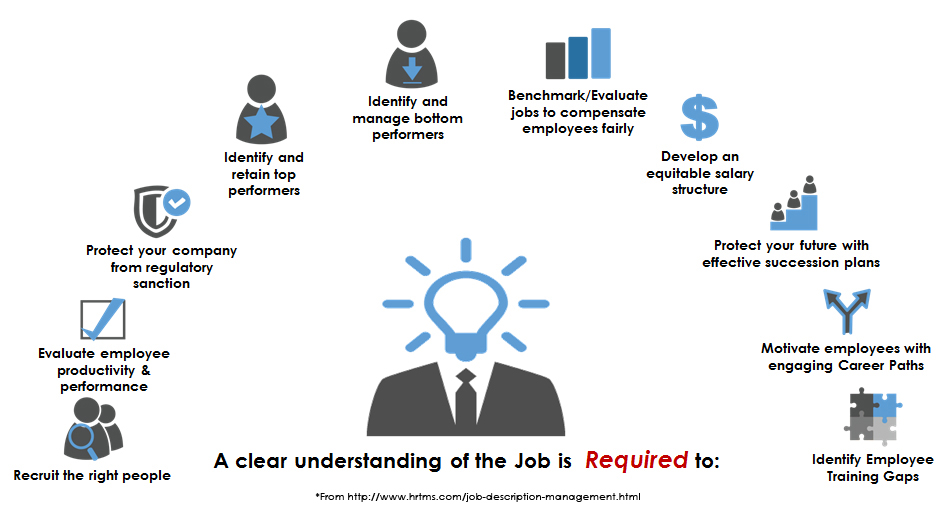
A job description is often the first impression a candidate has of your organisation — and the main filter deciding who applies at all. Write it well and you attract a strong, relevant field and make shortlisting easier. Write it carelessly and you either drown in unsuitable applications or, worse, quietly put off the very people you most wanted to reach. A good job description does two jobs at once: it sells the role to the right people and filters out the wrong ones. This guide explains the structure to follow, the sections you must include, how to handle requirements, and how to write inclusively.
What a job description is
A job description is a document that sets out the purpose, responsibilities and requirements of a role, so that both you and potential candidates understand what the job involves and who it is for. In practice it serves several audiences: applicants deciding whether to apply, hiring managers shortlisting and interviewing, and the eventual post-holder understanding what is expected of them.
It is worth distinguishing it from a job advert. The description is the fuller, more functional document; the advert is the shorter, more persuasive public version. For many smaller organisations the two blur into one posting — which is fine, as long as the result is both clear and appealing.
A job description is a marketing document as much as an administrative one. The best candidates have choices; give them a reason to choose you.
Getting the role right on paper starts well before the advert — it flows from understanding what the work actually requires, much as you would when writing a business case for any new commitment.
The structure to follow
A clear, consistent structure helps candidates find what they need and helps you compare applicants fairly. A reliable order is:

- Job title — accurate, recognisable and searchable.
- Role summary — one or two sentences on the purpose of the job.
- Key responsibilities — what the person will actually do.
- Essential and desirable requirements — what they need to bring.
- Practical details — pay, location, working pattern, reporting line.
- About the organisation — a short, genuine sense of who you are.
- How to apply — the process, deadline and any documents required.
You do not need to follow this slavishly, but covering each element prevents the most common omissions.
Writing each section well
The job title
Use a clear, conventional title that candidates would actually search for. "Marketing Executive" will be found; "Brand Storytelling Ninja" will not, and may signal an unserious employer. Avoid inflating or obscuring the level of the role.
The role summary
In one or two sentences, capture why the role exists and the difference it makes. This is the hook that persuades someone to keep reading, so make it human and specific rather than generic boilerplate.
Key responsibilities
List the genuine, day-to-day responsibilities — ideally six to ten focused points rather than an exhaustive catalogue. Start each with an active verb ("manage", "develop", "support") and concentrate on outcomes, not just tasks. Be honest: overselling a junior role as more senior than it is leads to disappointment and early departures. Where a role contributes to wider goals, it can help to connect it to how you measure performance so expectations are clear from the start.
Essential vs desirable requirements
This is where many job descriptions go wrong. Cramming in every conceivable skill as "essential" creates two problems: it deters strong candidates who meet most but not all criteria, and it makes shortlisting harder because almost nobody qualifies. Discipline yourself to split requirements into two honest lists:
| Essential | Desirable |
|---|---|
| What someone genuinely cannot do the job without | What would be a bonus but can be learned or developed |
| Used to filter applications | Used to differentiate between strong candidates |
| Keep this list short and true | This is where "nice to have" belongs |
Ask of each "essential": could a capable person learn this quickly on the job? If yes, it probably belongs under desirable. Research and experience consistently suggest that long requirement lists discourage applicants — particularly those who will not apply unless they meet every point.
Practical details
Be transparent. Include the salary or a realistic range, the location (and whether remote or hybrid working is available), the working pattern and hours, the contract type, and the reporting line. Hiding pay wastes everyone's time and increasingly frustrates candidates. If the role is a contractor engagement rather than employment, be clear about that too — the distinction matters, as our guide on contractor versus employee explains.
Inclusive language
Inclusive language is not box-ticking — it directly widens and strengthens your candidate pool. A few practical principles:
- Cut the jargon. Internal acronyms and industry buzzwords exclude capable outsiders and make roles harder to find.
- Watch gendered wording. Terms with strong gender associations can subtly discourage applicants; aim for neutral phrasing.
- Keep requirement lists tight. As above, shorter essential lists encourage a broader range of people to apply.
- Welcome adjustments. State clearly that you will make reasonable adjustments for disabled candidates and explain how to request them; GOV.UK and Acas offer useful guidance here.
- Focus on capability, not pedigree. Emphasise what someone needs to be able to do, rather than narrow markers like specific employers or exact years of experience.
The goal is simple: make sure that everyone capable of doing the job feels able to apply, and that nobody is filtered out for reasons unrelated to the work. This connects to broader good practice in how you bring people in — see staff onboarding best practices for what happens after the hire.
A quick pre-publish checklist
Before you post, run through:
- Is the title clear, accurate and searchable?
- Does the summary explain the role's purpose in a sentence or two?
- Are responsibilities active, honest and focused on outcomes?
- Are essentials genuinely essential, with everything else under desirable?
- Have you stated pay, location and working pattern?
- Is the language free of jargon and unnecessary requirements?
- Is it clear how to apply, with a deadline?
The bottom line
A strong job description does two things at once: it attracts the right people and filters out the wrong ones. Follow a clear structure, lead with an honest summary and real responsibilities, and be ruthless about separating genuine essentials from nice-to-haves. Be transparent about pay and working arrangements, and use inclusive, jargon-free language so that everyone capable of doing the job feels able to apply. A little care here pays off through a stronger field, a fairer process and a better hire.
Frequently asked questions
What is the difference between a job description and a job advert?
A job description is the detailed internal document setting out a role's purpose, responsibilities and requirements. A job advert is the shorter, more persuasive public version used to attract applicants. They overlap heavily, and many small organisations effectively combine them, but the advert leans more on selling the role.
What should every job description include?
At a minimum: a clear job title, a one or two sentence summary of the role's purpose, the main responsibilities, the essential and desirable requirements, and practical details such as location, working pattern, reporting line and how to apply. Including pay information is strongly recommended.
Why does inclusive language matter in a job description?
Inclusive, jargon-free language helps you reach a wider, more diverse pool of candidates and avoids unintentionally discouraging suitable people. Long lists of requirements and heavily gendered or culture-specific wording can deter strong applicants, particularly those who do not assume they meet every single criterion.
How long should a job description be?
Long enough to be clear and short enough to be read. Focus on the responsibilities that genuinely matter and the requirements that are truly essential, rather than padding the document. A focused one to two pages usually works better than an exhaustive list nobody finishes reading.
Join in — free. Comments on Daily Junction are for members, so real names stay rare and bots stay out.
One field. We email you a 6-digit code — no password needed. Your comment is kept while you do it.
Under 13? You’ll need a parent’s OK first — it takes them one click.