

Context: a different philosophy of conservation
Rewilding has moved from a fringe idea to one of the most talked-about approaches in conservation, and it represents a genuine philosophical shift. Traditional conservation often means maintaining a particular landscape in a particular state — mowing a meadow, coppicing a wood — through continuous human intervention. Rewilding takes the opposite view: that the most powerful thing we can do for degraded ecosystems is to restore the natural processes that once shaped them and then step back, accepting outcomes we cannot fully predict. In a country as nature-depleted as the UK, that idea has attracted both passionate support and real controversy, and the evidence for what it can achieve is now substantial enough to assess seriously.
The data: what rewilding has demonstrated
The clearest evidence for rewilding in Britain comes from the Knepp Estate, a 3,500-acre former dairy and arable farm in West Sussex. Failing commercially on its heavy clay soil, Knepp began converting to rewilding in 2001 — removing intensive management, letting scrub develop, and introducing free-roaming cattle, ponies, pigs and deer as proxies for the wild grazing animals that once shaped such landscapes. The transformation has been remarkable:
| Species at Knepp | Significance |
|---|---|
| Turtle doves | Near-extinct in the UK; now breeding |
| White storks | Bred in 2020, first in Britain in centuries |
| Nightingales | Thriving in the developing scrub |
| Purple emperor butterflies | One of the UK's largest populations |
The underlying mechanism is best illustrated by the most famous rewilding case of all: the reintroduction of wolves to Yellowstone National Park in 1995. The wolves reduced and altered the behaviour of elk, which stopped overgrazing riverbanks; vegetation recovered; riverbanks stabilised; beaver and bird populations grew. This "trophic cascade" — a chain of effects rippling through an ecosystem from the restoration of a top predator — demonstrated how restoring a single missing component can reshape an entire landscape in ways no management plan could have engineered.
What's changing: rewilding in a nature-depleted country
The urgency behind rewilding in Britain comes from a stark fact: the UK is one of the most nature-depleted countries in the world. The Natural History Museum's Biodiversity Intactness Index has repeatedly ranked the UK near the bottom globally, reflecting centuries of intensive agriculture, habitat loss and species decline. Against that backdrop, even partial restoration of natural processes can produce outsized biodiversity gains, which is part of why rewilding has gained momentum — from large estates like Knepp to river restoration, the return of beavers to English rivers, and smaller-scale "rewilding" of gardens, verges and marginal land.
"Rewilding isn't about recreating some imagined pristine past — it's about restoring the processes, the grazing, the predation, the natural disturbance, that make an ecosystem self-sustaining, and then having the humility to let nature take it from there." — a framing central to how organisations like Rewilding Britain describe the approach.
What it means for you
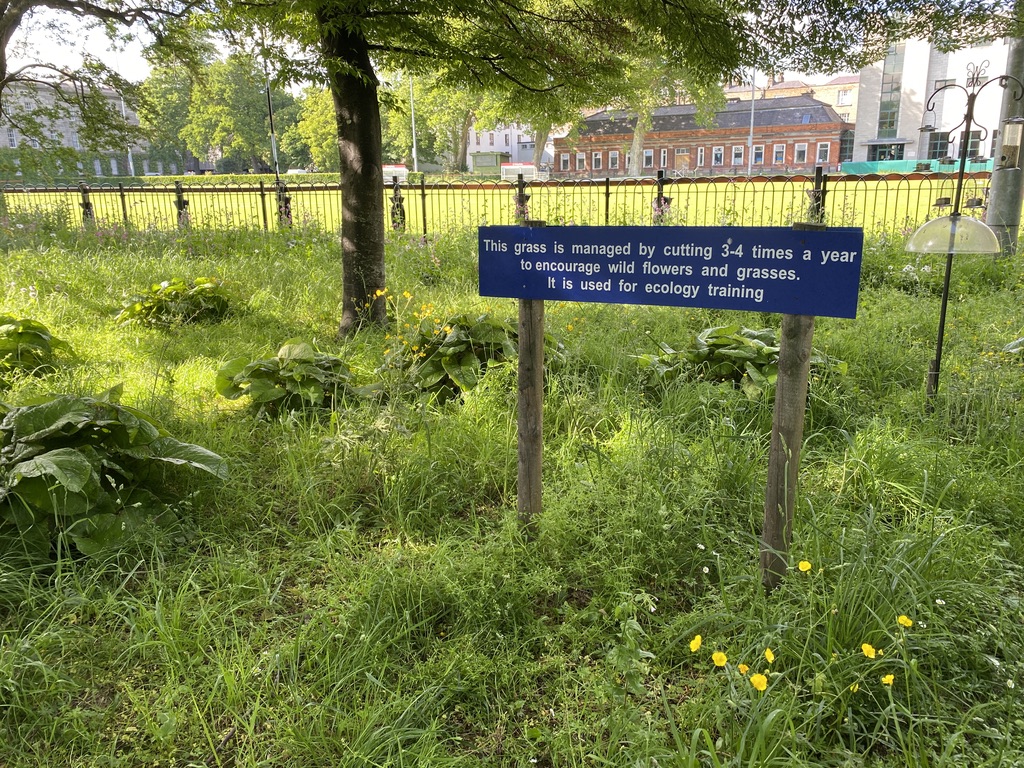
Rewilding might seem like something that happens on distant estates, but its principles scale down to individual action and local decisions. Letting part of a garden grow wild, planting for pollinators, supporting the restoration of local green spaces, and backing land-use policies that make room for nature all contribute to the same broad goal of restoring natural processes. It also connects to wider debates you have a stake in: how farming subsidies are structured (post-Brexit UK schemes increasingly pay farmers for environmental outcomes), whether beavers and other species should be reintroduced, and how the UK meets its legal biodiversity targets. Understanding rewilding helps you engage with these choices, which are ultimately about what kind of countryside the UK wants. Our related explainers on what biodiversity is and why it matters and how ecosystems function provide the ecological grounding, and our piece on greener gardening covers what individuals can do.
It's also worth being honest about the genuine tensions rewilding raises, because it is not without legitimate critics. Farmers worry, reasonably, about land being taken out of food production at a time of concern about food security, and about the risk to livestock if large predators were ever reintroduced. Some rural communities see rewilding as something imposed by outsiders on landscapes shaped by generations of farming, and question whose vision of the countryside it serves. And there are ecological debates too — about whether free-roaming grazing animals are a true substitute for the wild herbivores they replace, and about how to balance rewilding against other conservation priorities. A serious case for rewilding engages with these objections rather than dismissing them, and the most successful projects, Knepp included, have generally worked by demonstrating benefits and building local support rather than by imposing change. The strongest version of the movement treats rewilding as one tool among several for a nature-depleted country, not a single answer to be applied everywhere regardless of context.
What to watch next
Watch the debate over species reintroductions, particularly beavers — now established on several English rivers — and the more contentious question of whether larger species could ever return, which pits biodiversity benefits against farmers' legitimate concerns. Watch how post-Brexit farming policy evolves, since schemes that pay landowners for environmental outcomes rather than production could make rewilding and nature-friendly farming financially viable at far greater scale. And watch whether the UK meets its own legally binding biodiversity targets, since rewilding is increasingly seen as one of the tools capable of reversing the decline that has left Britain so nature-depleted — a test not just of the approach but of whether the country is genuinely willing to make room for nature at the scale the science says is needed.
Frequently asked questions
What exactly is rewilding?
Rewilding is an approach to conservation focused on restoring natural processes and letting ecosystems become self-sustaining, rather than managing land toward a fixed, human-defined target. The key insight is that ecosystems are dynamic, not static: restoring missing components — particularly large herbivores and, where possible, apex predators — sets off cascading effects that reshape the whole system in ways that can't be precisely planned or controlled. It contrasts with traditional conservation, which often maintains a specific habitat in a specific state through continuous intervention.
What actually happened at the Knepp Estate?
Knepp, a 3,500-acre former dairy and arable farm in West Sussex, was failing commercially on heavy clay soil when its owners began converting it to a rewilding project in 2001. They removed intensive management, let scrub and vegetation develop naturally, and introduced free-roaming grazing animals — cattle, ponies, pigs and deer — that act as proxies for the wild herbivores that once shaped the landscape. The results have been dramatic: turtle doves (near-extinct in the UK), nightingales, and purple emperor butterflies have flourished, and in 2020 white storks bred there for the first time in Britain in centuries.
What is a 'trophic cascade' and why is Yellowstone the famous example?
A trophic cascade is a chain of ecological effects that flows through an ecosystem when a top predator is added or removed. The reintroduction of wolves to Yellowstone National Park in 1995 is the classic case: wolves reduced and changed the behaviour of elk, which stopped overgrazing riverbanks; vegetation recovered; riverbanks stabilised; and beaver and bird populations grew. While the Yellowstone story is sometimes told too simply — other factors were involved — it remains the most powerful illustration of how restoring a single apex predator can reshape an entire landscape.
Isn't the UK too small and crowded for rewilding?
Rewilding at the scale needed to shift national biodiversity trends does require land, which is scarce and expensive in Britain, and reintroducing large predators raises genuine concerns for farmers about livestock. But rewilding doesn't require wilderness — Knepp sits in crowded lowland Sussex, and smaller projects, river restoration, and 'rewilding' of gardens, verges and marginal farmland all contribute. The UK is one of the most nature-depleted countries in the world, which is precisely why even partial restoration of natural processes can produce outsized gains for biodiversity.



Join in — free. Comments on Daily Junction are for members, so real names stay rare and bots stay out.
One field. We email you a 6-digit code — no password needed. Your comment is kept while you do it.
Under 13? You’ll need a parent’s OK first — it takes them one click.