The circular economy keeps materials in use for as long as possible instead of making, using and throwing away. Here is what it means, the principles behind it, and real examples of how it works.
Elena MarshEnvironment & Climate Correspondent••5 min read
TL;DRA circular economy keeps products and materials in use for as long as possible, rather…Its core moves are to reduce, reuse, repair and recycle - with reducing and reusing…Good design is central: products built to last, be repaired and be taken apart enable…
Read aloud by your browser — nothing is downloaded or tracked.
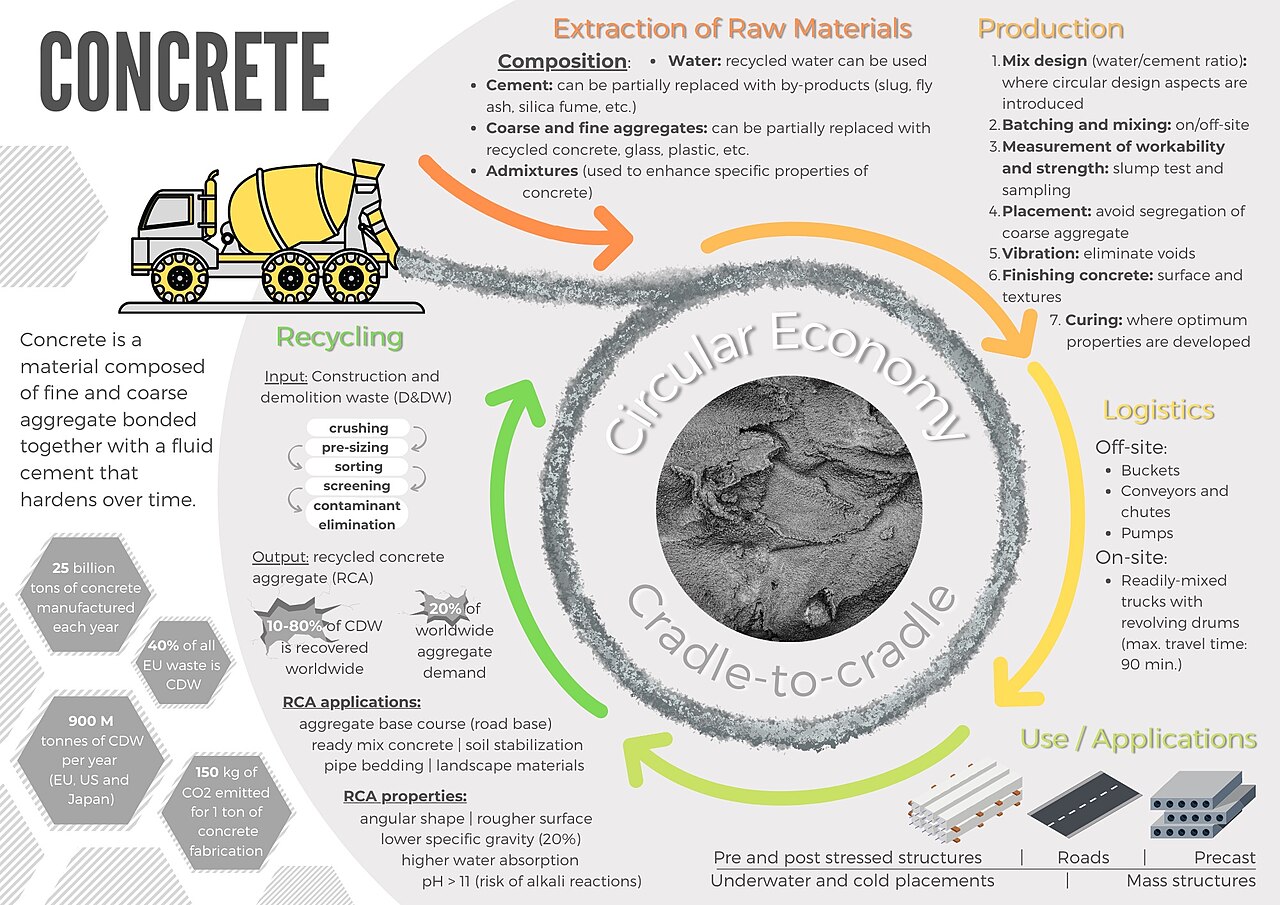
For most of the industrial age, the economy has run in a straight line: extract raw materials, make products, use them, and throw them away. That model is simple, but it treats finite resources as endless and waste as inevitable. The circular economy is the attempt to bend that line into a loop - keeping materials in use for as long as possible. Here is what it means, the principles that drive it, and what it looks like in practice.
What the circular economy is
A circular economy is an economic model that keeps products, components and materials in use for as long as possible, designing out waste and pollution. Instead of ending in a bin, materials are cycled back into use again and again.
The contrast is with the linear economy - often summed up as take, make, dispose. In the linear model, value is created once and then discarded; in the circular model, value is preserved and recovered. What looks like waste becomes a resource for the next cycle.
Linear economy
Circular economy
Flow
Take, make, dispose
Make, use, return, reuse
Materials
Extracted, used once, binned
Kept in use, cycled back
Waste
An accepted by-product
Designed out wherever possible
Value
Created once
Preserved and recovered
This matters for the climate as well as for resources, because extracting and processing raw materials is energy-intensive and a large source of emissions - the same emissions counted in a carbon footprint. Using a material twice can avoid making it twice.
The principles behind it
The circular economy is often boiled down to a familiar phrase - reduce, reuse, recycle - but the order is not arbitrary. It reflects a hierarchy, with the most valuable actions first.
Reduce. The cleanest waste is the waste never created. Using less, and making products that last, sits at the top.
Reuse and repair. Keeping a product whole and in service - repairing, refurbishing, passing it on - preserves the energy and value already invested in it.
Recycle. Breaking a product down to recover raw materials is worthwhile, but it is lower in the hierarchy because it loses much of the product's structure and value, and itself takes energy.
Recover and, last, dispose. Only what genuinely cannot be cycled should be discarded.
Recycling is the safety net, not the goal. A product kept in use for a decade does far more good than the same product recycled after a year. The aim is to climb the hierarchy, not just to recycle harder.
This is why the circular economy is broader than recycling. It overlaps with everyday habits explored in our guides to reducing food waste and composting at home, both of which return materials to use rather than landfill.
Why design is central
A product's whole life is largely decided on the drawing board. Roughly how easily something can be reused, repaired or recycled is determined when it is designed. That makes design the foundation of circularity.
Circular design aims to make products that are:
Durable - built to last rather than to be replaced.
Repairable - able to be opened, with spare parts and instructions available.
Upgradeable - so one component can be replaced without binning the whole device.
Made from separable materials - so they can be taken apart and recycled cleanly, rather than glued or fused.
Free of harmful substances that contaminate recycling streams.
The opposite - products glued shut, made from blended materials, or designed to be thrown away - blocks every loop downstream, no matter how willing the consumer.
Examples in action
The circular economy is not a theory waiting to happen; many parts of it already operate.
Refill and reuse schemes. Refillable packaging, deposit-return for bottles and refill stations for household products cut single-use waste.
Repair and resale. Repair cafes, manufacturer repair programmes and thriving second-hand and resale marketplaces keep products in circulation. The "right to repair" movement pushes for easier, cheaper fixes.
Remanufacturing. Worn parts and machinery - from car components to industrial equipment - are restored to as-new condition and sold again, recovering most of the original value.
Product-as-a-service. Instead of owning items, customers lease and return them, giving manufacturers a reason to make them durable and reusable. Tool libraries and equipment hire work on the same principle.
Industrial symbiosis. One factory's waste heat or by-product becomes another's input, looping materials between businesses.
Organic loops. Food and garden waste composted back into soil is one of the oldest circular systems of all.
The benefits - and the limits
Done well, circularity cuts waste, reduces the emissions tied up in making new things, lessens dependence on scarce raw materials, and can create jobs in repair, refurbishment and recycling. It connects to wider environmental goals such as net zero, because avoiding production avoids emissions.
It is not a cure-all, though. Recycling has real limits - some materials degrade each cycle, and collection and sorting are imperfect. Reuse depends on convenient systems and willing habits. And circular approaches must be genuine, not "greenwashing" a fundamentally wasteful product. The honest version of the circular economy keeps the hierarchy in mind: reduce and reuse first, recycle second, and design everything to make those loops possible.
What it means for you
You do not need to overhaul your life to take part:
Buy less, and buy things built to last.
Repair before replacing, and seek out repairable products.
Choose second-hand, and pass on what you no longer need.
Use refill and deposit-return schemes where available.
Recycle properly - and compost food and garden waste.
The bottom line
The circular economy keeps products and materials in use for as long as possible, designing out waste instead of treating it as inevitable. Its hierarchy puts reducing and reusing above recycling, because keeping things whole preserves the most value and energy. Good design - durable, repairable, made from separable materials - is what makes the loops possible, and real examples already exist, from refill schemes and repair to remanufacturing and product-as-a-service. The goal is not simply to recycle more, but to make and waste less in the first place.
Frequently asked questions
What is the circular economy?
It is an economic model that keeps products, components and materials in use for as long as possible, designing out waste and pollution. It contrasts with the linear economy, in which we take raw materials, make products, use them and throw them away. In a circular system, what would be waste becomes an input for something else.
How is it different from recycling?
Recycling is one part of a circular economy, but not the whole of it - and not the most important part. The hierarchy puts reducing consumption, then reusing and repairing, above recycling, because keeping a product whole and in use preserves far more of its value and energy than breaking it down into raw material.
Why does product design matter so much?
Because roughly how a product can be reused, repaired or recycled is largely decided when it is designed. Items built to last, easy to repair, and simple to take apart into separable materials can circulate; items that are glued shut, mixed from hard-to-separate materials or made to be disposable cannot. Good design is the foundation of circularity.
Can you give examples of the circular economy in action?
Yes - refillable packaging and refill stations, repair cafes and manufacturer repair schemes, second-hand and resale marketplaces, remanufacturing of parts and machinery, and product-as-a-service models where you lease and return items rather than owning them. Composting food and garden waste is another everyday example of returning materials to use.
We use cookies, device fingerprinting and cross-device tracking to personalise content, serve targeted advertising, and analyse how you use our site across your devices. By clicking Accept all you consent to the use of these tracking technologies. Your data may be used to build a profile of your interests and show you personalised ads on other sites.
Privacy policy
Before you go
Get the Daily Briefing
Independent reporting, new on the hour, with the sharpest headlines in one email.



Join in — free. Comments on Daily Junction are for members, so real names stay rare and bots stay out.
One field. We email you a 6-digit code — no password needed. Your comment is kept while you do it.
Under 13? You’ll need a parent’s OK first — it takes them one click.