
Many of us eat the way we breathe — automatically, barely noticing. We eat at our desks, in front of screens, standing at the counter, or scrolling through a phone, and we finish a meal with little memory of actually tasting it. Mindful eating is a deliberate antidote to that autopilot. It is not a diet or a list of forbidden foods, but a way of bringing attention back to the simple act of eating. This is general information rather than medical advice; if you have a complicated relationship with food or a medical condition affecting your diet, speak to a clinician or the NHS.
What mindful eating is
Mindful eating is the practice of paying full, non-judgemental attention to the experience of eating — the food itself and your body's signals of hunger and fullness. It borrows from mindfulness more broadly: the idea of being present in the moment rather than lost in distraction or habit.
In practice that means noticing the look, smell, texture and taste of what you eat; eating slowly enough to register those things; and tuning in to whether you are actually hungry, and when you have had comfortably enough. It also means doing all this without harsh self-criticism — observing your eating rather than judging it.
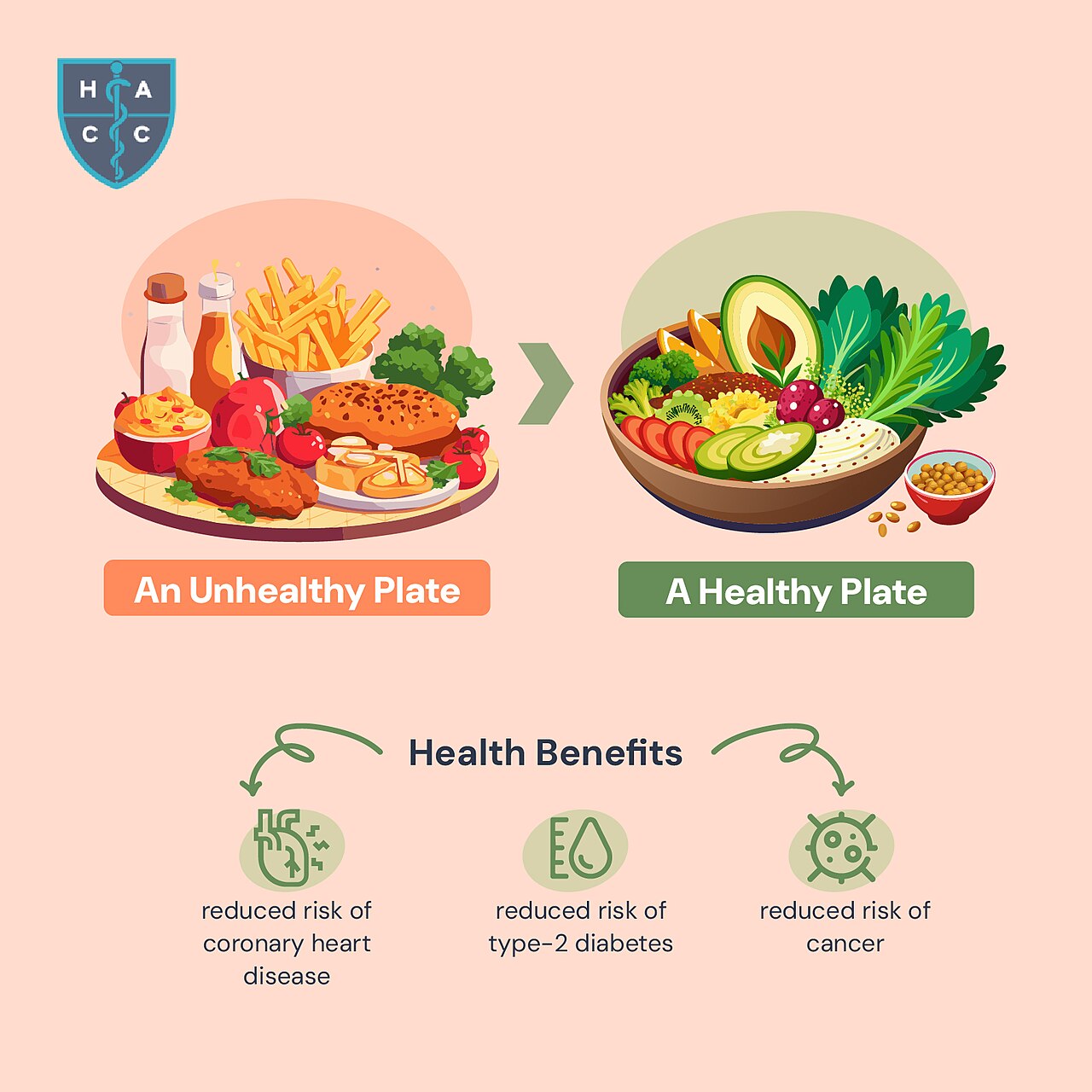
Importantly, mindful eating does not tell you what to eat. There are no banned ingredients, no calorie counting and no "good" or "bad" food labels. In that sense it is a useful complement to standard nutrition guidance like building a balanced plate, which focuses on the what, while mindful eating focuses on the how.
Why how we eat matters
Modern eating is full of cues that encourage us to override our bodies. Large portions, constant snacking, eating while distracted, and using food to manage stress or boredom can all loosen the link between hunger and eating.
Two patterns are especially common:

- Distracted eating. When you eat while watching television or working, your attention is elsewhere, so you are less likely to notice fullness and tend to eat more — and enjoy it less.
- Emotional eating. Reaching for food in response to stress, sadness or boredom rather than physical hunger is a near-universal habit. It is not a moral failing, but doing it on autopilot can leave you feeling worse rather than better.
Mindful eating works on both by slowing the process down and reintroducing awareness, so that eating becomes a conscious choice rather than a reflex. This makes it a natural partner to wider habit work, such as the techniques in breaking a habit you would rather drop, since changing how you eat is itself a behaviour change.
What the evidence suggests
Mindful eating has a growing, if still developing, research base. The most consistent findings are around eating behaviour rather than dramatic weight loss:
- It can reduce binge eating and emotional eating in people who struggle with them.
- It can help people eat more in line with their appetite, stopping when comfortably full.
- It tends to improve people's relationship with food, reducing guilt and all-or-nothing thinking.
Where weight is concerned, the picture is more nuanced. Some studies show modest benefits, often through reduced overeating, but mindful eating is best understood as a supportive habit rather than a guaranteed weight-loss technique. Its value lies as much in how it makes eating feel as in any number on the scales.
The goal is not to eat perfectly. It is to eat with attention, so your choices come from awareness rather than habit or distraction.
How to eat more mindfully
You do not need a course or an app to start. The aim is to add small moments of attention, not to overhaul every meal at once.
- Remove distractions. Try eating at least one meal a day away from screens and work. Even sitting at a table rather than a desk helps.
- Slow down. Put your cutlery down between bites, chew properly, and give the meal a few extra minutes. Fullness signals take time to register, so eating quickly often means eating past comfort.
- Check in before you start. Ask whether you are physically hungry or eating out of habit, stress or boredom. There is no wrong answer — the point is simply to notice.
- Pause halfway. Midway through a meal, take a breath and ask how full you feel. You can always continue; the pause just restores choice.
- Use your senses. Notice the colours, smells, textures and flavours. This both increases enjoyment and naturally slows you down.
A simple starting exercise
A classic way to experience the shift is to eat one small item — a piece of fruit, a square of chocolate, a few nuts — with complete attention for a couple of minutes. Look at it, smell it, taste it slowly, and notice everything about it. Most people are surprised by how different the experience feels from their usual eating. It is a small demonstration of what attention adds.
Common misunderstandings
A few myths are worth clearing up:
- It is not about eating slowly forever. Slowing down is a tool, not a rule. The aim is awareness, which sometimes simply means noticing you are rushing.
- It does not forbid treats. Mindful eating can actually make occasional indulgences more satisfying, because you are present for them.
- It is not a substitute for nutrition basics. It pairs with, rather than replaces, broad guidance on a varied, balanced diet.
The bottom line
Mindful eating means paying genuine attention to the experience of eating and to your body's hunger and fullness, rather than eating on autopilot or in front of a screen. It is a way of eating, not a diet, and it bans nothing. The evidence is most encouraging for reducing overeating and improving your relationship with food. You can start today with a single distraction-free meal, a slower pace and a mid-meal pause — small habits that hand the choice back to you.
Frequently asked questions
What is mindful eating in simple terms?
It is eating with full attention: noticing the taste, texture and smell of your food, eating slowly, and tuning in to your body's signals of hunger and fullness instead of eating automatically or while distracted.
Is mindful eating a diet?
No. It is an approach to how you eat rather than a set of rules about what you can or cannot eat. There are no banned foods and no calorie targets; the focus is on awareness and your relationship with eating.
Can mindful eating help with weight?
It can help some people eat in better tune with their appetite and reduce overeating, which may support weight management. It is best seen as one helpful habit alongside overall healthy eating and activity, not a guaranteed weight-loss method.
How do I start eating more mindfully?
Start small: eat one meal a day without screens, slow down, put your cutlery down between bites, and pause halfway to check how full you feel. Even a few minutes of attention can make a difference.


Join in — free. Comments on Daily Junction are for members, so real names stay rare and bots stay out.
One field. We email you a 6-digit code — no password needed. Your comment is kept while you do it.
Under 13? You’ll need a parent’s OK first — it takes them one click.