
Context: information overload on every packet
Modern food packaging is dense with numbers, colours and claims — front-of-pack traffic lights, per-portion figures, percentages, marketing terms like "natural" and "low fat." For most shoppers it's information overload, and much of it is designed to sell rather than inform. Yet the label genuinely does contain what you need to make good choices, if you know which parts to trust and how to read them. Learning to read a food label properly is one of the more useful everyday skills for eating well, because it lets you see past the marketing on the front to the reality on the back — and it takes only a few seconds once you know what you're looking at.
The data: the parts of a label that matter
A UK food label has several components, and they are not equally useful. The most reliable is the mandatory nutrition table on the back, which by law must show energy (calories), fat, saturates, carbohydrates, sugars, protein and salt. The key to using it is the per-100g column, which is standardised and lets you compare products fairly regardless of pack or portion size — unlike the per-portion column, where manufacturers sometimes define a "portion" generously to flatter the numbers.
| Label element | What it tells you | How reliable |
|---|---|---|
| Per-100g column | Fair comparison between products | Most reliable |
| Traffic lights | Quick red/amber/green guide (front of pack) | Useful first filter |
| Ingredients list | What's actually in it, by weight | Very informative |
| Per-portion figures | Realistic serving amounts | Check portion size is realistic |
| Front-of-pack claims | Marketing | Least reliable |
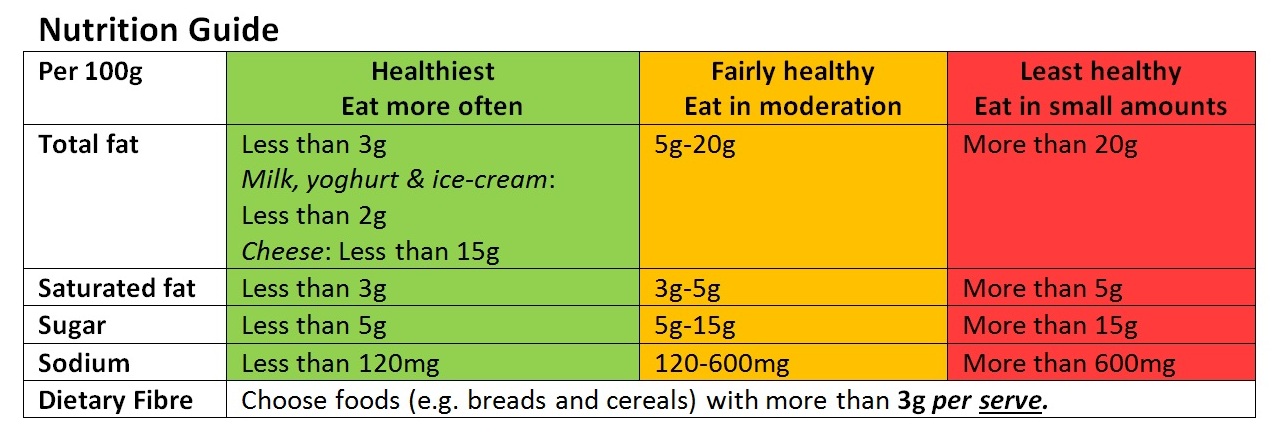
The UK's voluntary front-of-pack traffic-light scheme colour-codes fat, saturated fat, sugars and salt as red, amber or green, offering a fast visual guide. And the ingredients list — ordered by weight, so the first few ingredients dominate — often reveals more about what a food really is than any front-of-pack claim.
What's changing: labels, and the limits of what they show
Food labelling continues to evolve, with ongoing debate about whether the voluntary traffic-light scheme should become mandatory, and growing interest in labels that capture things the current system misses — notably the degree of processing. The concept of ultra-processed foods has moved into mainstream nutrition discussion, and current labels don't directly flag it, even though a product can score reasonable traffic lights while being heavily processed. This is a real limitation: the existing label tells you about specific nutrients but not about the whole character of a food, which is why reading the ingredients list — where a long roll-call of additives and unfamiliar names signals heavy processing — remains one of the most informative habits.
"The front of the pack is advertising; the back of the pack is information. If you only learn one thing about food labels, learn to flip the packet over, look at the per-100g column, and read the first few ingredients. That alone puts you ahead of most shoppers." — a principle consistent with NHS and Food Standards Agency guidance on using labels.
What it means for you (shopping smarter)
In practice, a good label-reading routine takes seconds. Glance at the traffic lights for a quick sense of a product, then flip to the back for anything you eat regularly. Use the per-100g column to compare similar products, and be sceptical of unusually small stated portions. Scan the first few ingredients — if sugar (in any of its many guises) or a long list of additives leads the list, that tells you what the product mostly is. Watch the salt figure in particular, given the NHS 6g-a-day guideline and the fact that around 75% of dietary salt comes from processed foods rather than added at the table. And treat front-of-pack marketing claims with healthy suspicion: "natural," "low fat" (which can mean high sugar) and similar terms are chosen to sell. For the wider context of what to make of these numbers, our explainers on what ultra-processed foods are and the evidence behind the Mediterranean diet put label-reading into a bigger dietary picture, and our guide to cooking well on a budget shows how to eat well without relying on heavily processed convenience foods.

It's worth understanding a few of the specific tricks that make labels misleading, because knowing them makes you much harder to fool. "No added sugar" doesn't mean low sugar — a product can be naturally very high in sugar and still carry the claim. "Low fat" foods are frequently high in sugar to compensate for lost flavour, so a low-fat label is a prompt to check the sugar figure, not a green light. Serving sizes are sometimes set unrealistically small so the per-portion numbers look modest — a "portion" of crisps or biscuits defined as far less than anyone actually eats. And health-halo words like "natural," "wholesome" and "artisan" are marketing terms with no strict legal definition, unlike protected terms such as "organic." Once you know the label is partly a sales document, you read it differently: the legally-required nutrition table and ingredients list are the trustworthy parts, and everything designed to catch your eye on the front deserves a second, sceptical look.
What to watch next
Watch whether the UK moves from voluntary to mandatory front-of-pack labelling, a change long debated that would make the traffic-light system universal and comparisons easier. Watch the growing push for labels that reflect processing and environmental impact — some retailers and researchers are experimenting with "eco-labels" and processing indicators, which could reshape what packaging tells you. And watch reformulation: as sugar and salt reduction targets and taxes (like the soft drinks levy) take effect, the numbers on familiar products shift over time, so a label you read a couple of years ago may not match the current one. The enduring skill, whatever the labelling system, is the same: flip the packet, read the per-100g figures and the ingredients, and let the back of the pack — not the front — guide your choice.
Frequently asked questions
What do the traffic-light colours on food packaging actually mean?
The UK's voluntary front-of-pack labelling scheme colour-codes four nutrients — fat, saturated fat, sugars and salt — as red (high), amber (medium) or green (low) per portion. It's designed for quick comparison: more greens and ambers generally indicate a healthier choice than lots of reds. But it's a guide, not a verdict — some red ratings are fine in moderation (olive oil is high in fat but healthy), and the colours don't capture everything, such as fibre or the degree of processing. Use them as a fast first filter, then check the actual numbers for anything you eat regularly.
Should I look at the per-100g or per-portion figures?
Use per-100g to compare different products fairly, because pack and portion sizes vary and manufacturers sometimes define 'a portion' generously to make the per-portion numbers look better. The per-100g column is standardised, so it lets you genuinely compare, say, two breakfast cereals regardless of box size. Use the per-portion figure to understand what you're actually consuming in a realistic serving. Reading both, and being sceptical of unusually small stated 'portions', is the key to not being misled.
How do I read the ingredients list?
Ingredients are listed in descending order of weight, so the first few make up the bulk of the product. If sugar (under any of its many names — glucose syrup, dextrose, fruit juice concentrate and so on) appears near the top, the product is largely sugar. A long list of unfamiliar ingredients often signals a highly processed food. Allergens must be emphasised (usually in bold) by law. The ingredients list often tells you more about what a food really is than the marketing claims on the front of the pack.
What are Reference Intakes and how much salt should I have?
Reference Intakes (RIs) express a nutrient as a percentage of an average adult's recommended daily amount — so '30% of your RI' for sugar means one portion provides nearly a third of the daily guideline. They're based on an average adult and your own needs may differ. On salt specifically, the NHS advises adults consume no more than 6g a day, yet many processed foods contribute significant amounts, so the salt figure is one of the most useful numbers to watch, especially since around 75% of dietary salt comes from processed foods rather than the salt shaker.


Join in — free. Comments on Daily Junction are for members, so real names stay rare and bots stay out.
One field. We email you a 6-digit code — no password needed. Your comment is kept while you do it.
Under 13? You’ll need a parent’s OK first — it takes them one click.