Your gut hosts around 100 trillion microorganisms, and a landmark 2018 study suggested eating 30 different plants a week supports a healthier microbiome. Here is what the science genuinely shows — and what remains hype.
Dr. Nadia OkoroScience & Health Writer•••5 min read
TL;DRThe gut microbiome comprises around 100 trillion microorganisms living mainly in the…The American Gut Project (2018) found people eating 30+ plant types a week had more…American Gut Project data links microbiome diversity to better health, though cause and…
Read aloud by your browser — nothing is downloaded or tracked.
Context: a genuinely exciting field, heavily oversold
The gut microbiome has become one of the most talked-about topics in health — and one of the most oversold. Genuine, exciting science sits alongside a booming market of supplements, tests and products making claims the evidence doesn't support. The result is a confusing picture where it's hard to tell what's established from what's speculative or simply marketing. Understanding what the science actually shows — and, just as importantly, what it doesn't yet — helps you make sensible choices about diet and gut health without falling for the hype or dismissing a genuinely important area of research. The honest picture is more useful, if less dramatic, than the wellness industry's version.
The data: what the microbiome is and what supports it
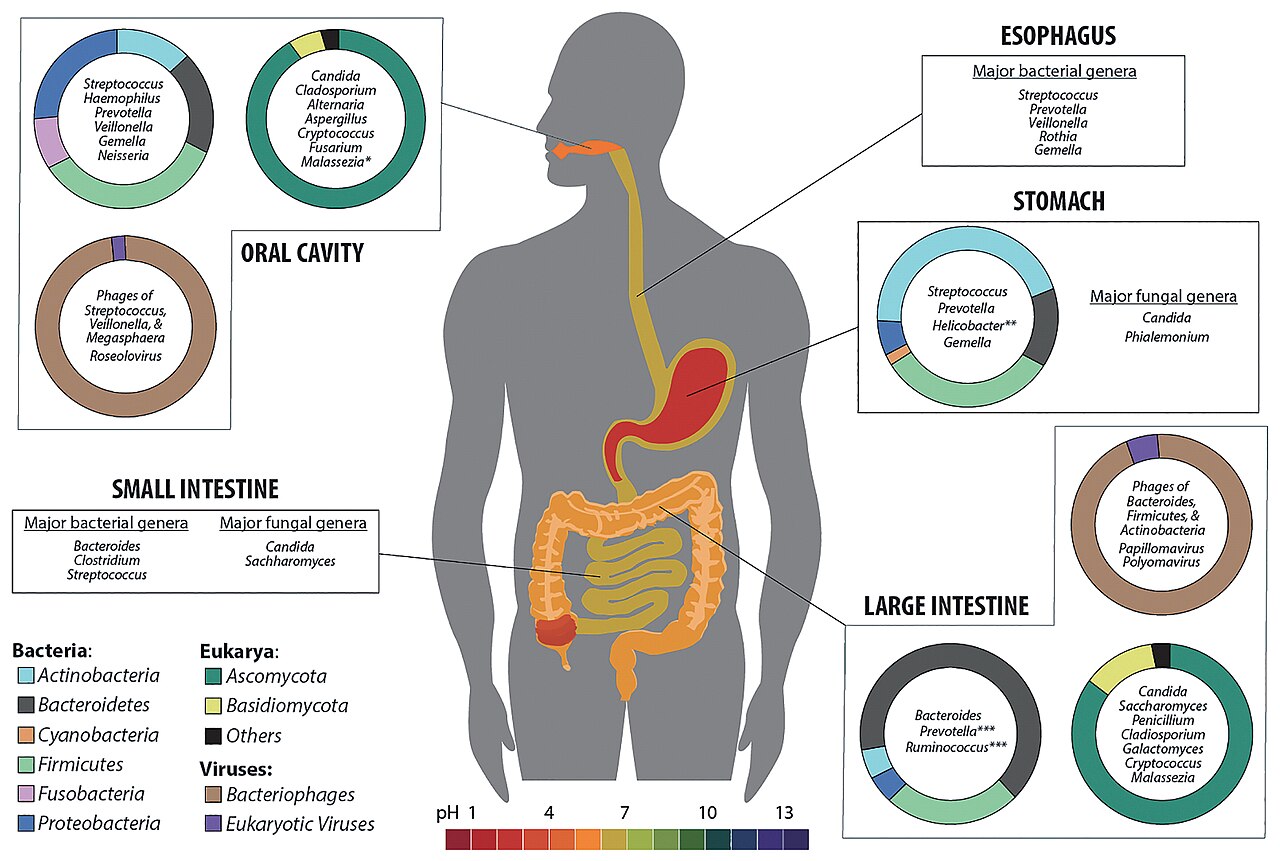
The gut microbiome is the community of microorganisms — mainly bacteria, but also fungi and viruses — living in your digestive tract, principally the large intestine. Estimates put the number at around 100 trillion microbial cells, comparable to the number of human cells in your body. Far from passive, these microbes help digest fibre, produce certain vitamins and compounds, and interact extensively with the immune system.
The single most useful, evidence-backed insight about supporting a healthy microbiome comes from the American Gut Project, published in 2018:
Finding
Detail
Microbial cells in the gut
~100 trillion
Key American Gut Project finding
People eating 30+ plant types/week had more diverse microbiomes
Why diversity of plants matters
Different plants feed different beneficial bacteria
Best-evidenced support
A wide range of fibre-rich plant foods
The "30 plants a week" figure includes fruit, vegetables, wholegrains, nuts, seeds, herbs and spices, making it more achievable than it sounds, and plant diversity — not just quantity — appears to matter because different plant fibres feed different beneficial microbes. Higher microbiome diversity is generally associated with better health, though cause and effect can be genuinely hard to disentangle.
What's changing: the science advances, the hype outpaces it
Microbiome research is one of the fastest-moving areas of health science, and each year brings genuine advances in understanding how gut microbes interact with digestion, immunity, metabolism and possibly the brain. The "gut-brain axis" — communication between the gut and the brain via neurotransmitters, the vagus nerve and the immune system — is a real and active field. But this is precisely where hype outruns evidence: much of the research linking specific microbiome states to mood, mental health or particular diseases in humans remains preliminary, often based on animal studies or associations rather than proven cause and effect.
"The gut microbiome is genuinely one of the most exciting areas in modern medicine, and also one of the most exploited by marketing. The gap between what a headline claims and what the underlying study actually showed is often enormous. The honest position is: eat a diverse, high-fibre diet, and be sceptical of anything promising more than that." — a stance consistent with how the British Dietetic Association assesses the current evidence.
What it means for you (practical, evidence-based steps)
The good news is that the best-evidenced advice is also the simplest and cheapest. Eat a wide diversity of plants — aiming toward that 30-a-week variety of fruit, vegetables, wholegrains, nuts, seeds, herbs and spices — because plant diversity feeds a diverse microbiome. Include fermented foods with live cultures (live yoghurt, kefir, unpasteurised sauerkraut and kimchi), which have growing evidence for supporting gut health. Be sceptical of expensive probiotic supplements with broad claims, since the evidence for general-purpose probiotics in healthy people is weak, and of direct-to-consumer microbiome tests, which currently can't reliably tell you much actionable. In short, feed your existing gut bacteria well rather than trying to buy a better microbiome. Our related explainers on the science of fermentation and fermented foods and the importance of fibre cover the two most evidence-backed dietary levers, and our piece on ultra-processed foods covers what appears to work against a healthy gut.
It's worth understanding why the microbiome became such fertile ground for overclaiming, because it helps you spot the pattern. The field combines genuine scientific excitement, real biological complexity that's hard for non-specialists to evaluate, and a plausible-sounding story — "trillions of tiny organisms secretly running your health" — that's perfect for marketing. Add a product that can be sold (a supplement, a test, a special food) and you have the ideal conditions for claims that outrun evidence. The tell is usually specificity without proof: a product that promises to fix your mood, energy, weight and immunity by targeting your microbiome is making claims far beyond what any current study supports. Genuine science, by contrast, tends to be more modest and more provisional — "diverse plant intake is associated with greater microbial diversity, which is generally linked to better health" is a real finding, but it doesn't fit on a supplement bottle. Learning to notice that gap between confident marketing and cautious science is a skill that serves you well far beyond gut health.
What to watch next
Watch the maturing research on the gut-brain axis and the microbiome's links to specific conditions, since this is where the biggest potential breakthroughs — and the biggest current overclaiming — both lie; distinguishing genuine advances from hype will remain the key skill. Watch the regulation of microbiome tests and probiotic products, which currently make claims with varying degrees of evidence, and where clearer standards would help consumers. And watch for the field's practical translation: as understanding improves, there's genuine promise in microbiome-informed approaches to conditions from digestive disorders to metabolic disease, but these remain largely in research rather than routine practice. The steady, unhyped message that holds across all of it is that a diverse, fibre-rich, plant-heavy diet with some fermented foods is the most reliable thing you can do for your gut — advice that has the double advantage of being both well-evidenced and good for your health generally.
Frequently asked questions
What exactly is the gut microbiome?
The gut microbiome is the vast community of microorganisms — mainly bacteria, but also fungi, viruses and others — living in your digestive tract, primarily the large intestine. Estimates put the number at around 100 trillion microbial cells, comparable to or exceeding the number of human cells in your body. These microbes aren't passive passengers: they help digest food (particularly fibre), produce certain vitamins and compounds, interact with the immune system, and are increasingly understood to influence aspects of health well beyond digestion.
What does the '30 plants a week' advice actually come from?
It comes from the American Gut Project, a large citizen-science study whose findings were published in 2018. It found that people who ate more than 30 different types of plant per week tended to have more diverse gut microbiomes than those eating 10 or fewer. Plant diversity — not just quantity — appears to matter because different plants feed different beneficial bacteria. The '30 plants' figure includes fruit, vegetables, wholegrains, nuts, seeds, herbs and spices, so it's more achievable than it first sounds, and it has become a popular, evidence-based rule of thumb for gut health.
Is the link between gut health and mood real?
The 'gut-brain axis' — the communication between the gut microbiome and the brain — is a genuine and active area of research, and there are plausible biological mechanisms (the gut produces neurotransmitters and communicates with the brain via the vagus nerve and immune system). However, much of the evidence linking specific microbiome states to mood and mental health in humans is still preliminary, often based on animal studies or associations rather than proven cause and effect. It's a promising field, but one where the marketing has run well ahead of the settled science, so healthy scepticism is warranted.
Should I take probiotic supplements for gut health?
The evidence for general-purpose probiotic supplements is mixed, and much weaker than the marketing suggests. Some specific probiotic strains have evidence for specific conditions (such as certain types of diarrhoea), but the idea that a daily probiotic supplement broadly improves a healthy person's gut is not well supported. Most experts advise that feeding your existing gut bacteria a diverse, high-fibre diet — plus fermented foods with live cultures — is more effective and better evidenced than buying expensive supplements with broad, unproven claims.
We use cookies, device fingerprinting and cross-device tracking to personalise content, serve targeted advertising, and analyse how you use our site across your devices. By clicking Accept all you consent to the use of these tracking technologies. Your data may be used to build a profile of your interests and show you personalised ads on other sites.
Privacy policy
Before you go
Get the Daily Briefing
Independent reporting, new on the hour, with the sharpest headlines in one email.





Join in — free. Comments on Daily Junction are for members, so real names stay rare and bots stay out.
One field. We email you a 6-digit code — no password needed. Your comment is kept while you do it.
Under 13? You’ll need a parent’s OK first — it takes them one click.