

The House of Lords is one of Britain's most peculiar constitutional anomalies: an unelected chamber of 784 members, including 92 hereditary aristocrats who sit in Parliament purely because of their bloodline. It is the world's second-largest legislature (after China's National People's Congress), costs taxpayers £155 million per year, and has more members than the elected House of Commons (650 MPs). Yet despite decades of reform promises from every major party, it endures — bloated, undemocratic, but surprisingly effective at its job.
Labour won the 2024 general election promising to remove hereditary peers and impose a retirement age, the latest in a century of half-hearted reform attempts. But the fundamental question remains unanswered: why does a modern democracy tolerate an unelected legislature, and will Britain ever summon the political will to abolish it?
What Is the House of Lords?
The House of Lords is the upper chamber of the UK Parliament, alongside the elected House of Commons. It scrutinises legislation, debates policy, and can delay or amend bills — but it cannot block them permanently.
Composition (as of July 2024)
The Lords has 784 members, none of them elected:
- 670 life peers — appointed for life by the monarch on the advice of the Prime Minister (or the independent House of Lords Appointments Commission for non-party peers)
- 92 hereditary peers — aristocrats who inherited their titles and seats (reduced from 750 in 1999)
- 26 bishops — senior Church of England clergy (the "Lords Spiritual")
By comparison, the elected House of Commons has 650 MPs.
Party breakdown
- Conservative: 273 peers
- Labour: 174 peers
- Liberal Democrat: 79 peers
- Crossbench (independent): 183 peers
- Bishops: 26
- Other: 49 peers
The Conservatives have the largest bloc, but no party has a majority. The crossbenchers (independents) hold the balance of power.
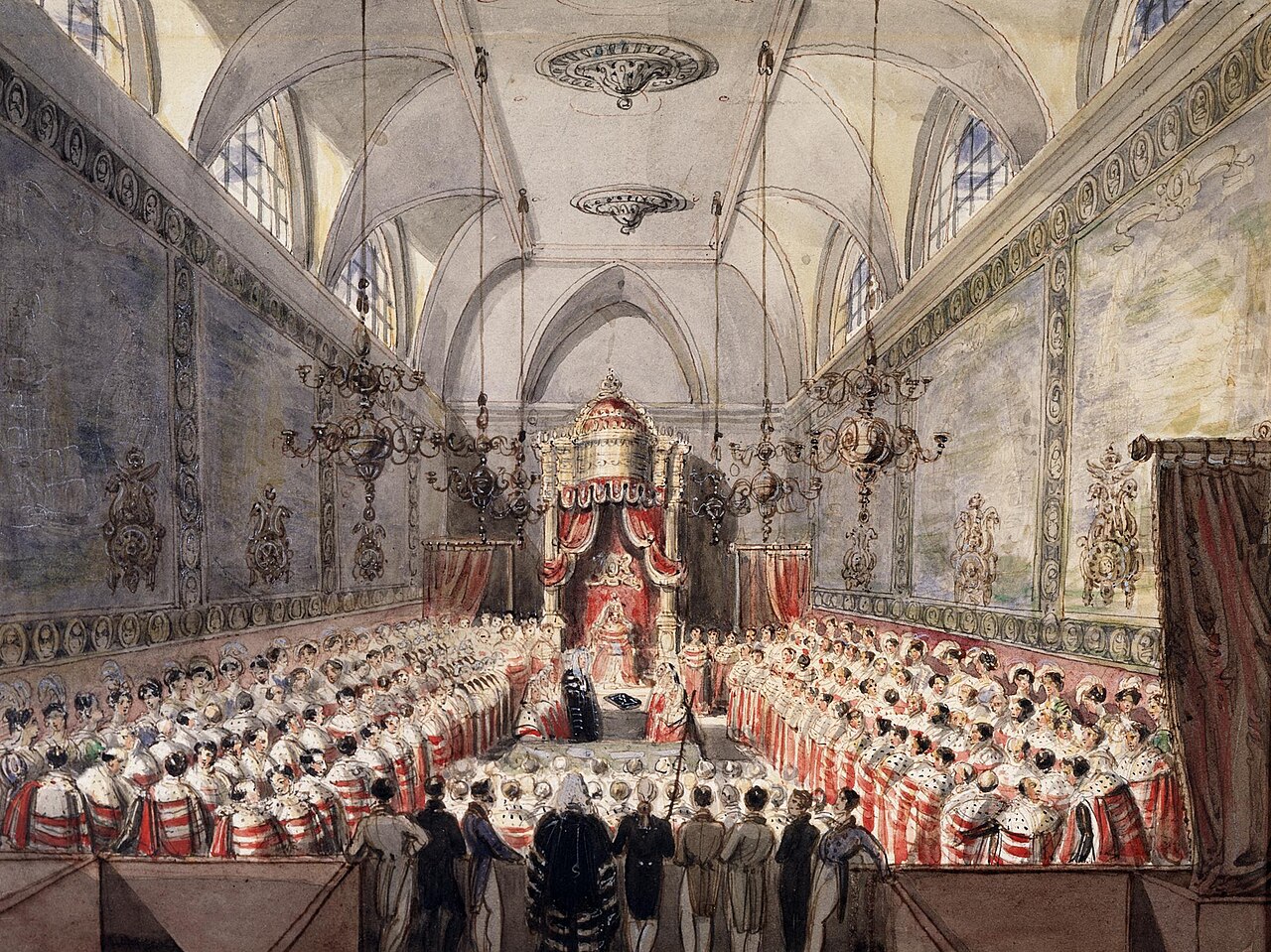
How members are appointed
- Life peers: Appointed by the monarch on the advice of the Prime Minister (usually political allies, donors, or retiring MPs) or the independent Appointments Commission (experts, public servants, community leaders)
- Hereditary peers: 92 seats reserved under the House of Lords Act 1999. When a hereditary peer dies, the remaining hereditary peers elect a replacement from the same party (yes, really — aristocrats elect aristocrats)
- Bishops: The 26 most senior Church of England bishops sit automatically (no other religion is represented)
What Does the House of Lords Do?
Despite its undemocratic composition, the Lords performs a genuine constitutional function: scrutinising legislation.
Legislative scrutiny
The Lords reviews bills passed by the Commons, proposing amendments to improve drafting, protect rights, or fix unintended consequences. In 2023-24, the Lords:
- Amended 25% of government bills
- Forced 147 government defeats (the government lost votes on amendments)
- Delayed controversial bills (e.g., Rwanda deportation bill, Public Order Act)
The government usually accepts Lords amendments to avoid delay, giving the chamber real influence.
Delaying power
Under the Parliament Acts 1911 and 1949, the Lords can delay non-financial bills for up to one year. It cannot block:
- Money bills (budgets, taxation)
- Manifesto commitments (policies in the governing party's election manifesto)
In practice, the Lords rarely uses its full delaying power — it knows the Commons will override it eventually, so it negotiates amendments instead.
Expertise
The Lords includes experts in law, medicine, science, business, and the military — often more knowledgeable than elected MPs. This expertise improves legislation, particularly on technical issues (e.g., AI regulation, medical ethics, defence procurement).
Debate
The Lords has more time for debate than the Commons, allowing detailed discussion of complex issues. Debates are generally more civil and less partisan than in the Commons (no Prime Minister's Questions-style shouting).
The Case Against the House of Lords
1. Undemocratic
The Lords is entirely unelected. No other major democracy has a fully unelected upper chamber:
- USA: Senate elected by voters
- Germany: Bundesrat appointed by elected state governments
- France: Senate elected by local councillors
- Australia: Senate elected by voters
- Canada: Senate appointed (but widely criticised and under reform pressure)
The UK and Canada are the only democracies with fully unelected upper chambers.
2. Hereditary peers
92 hereditary peers sit in Parliament purely because of their aristocratic bloodline. This is a medieval relic with no place in a modern democracy. When a hereditary peer dies, the remaining hereditary peers elect a replacement from the same party — a system so absurd it would be rejected as satire if proposed today.
3. Bishops
26 Church of England bishops sit automatically, giving one religion (Anglicanism) a privileged position in the legislature. No other religion is represented. In a secular, multi-faith society, this is indefensible.
4. Size
With 784 members, the Lords is the world's second-largest legislature (after China's 2,980-member National People's Congress). It is larger than the elected Commons (650 MPs) and far larger than comparable upper chambers:
- US Senate: 100 members
- German Bundesrat: 69 members
- French Senate: 348 members
- Australian Senate: 76 members
The Lords is bloated and inefficient.
5. Cost
The Lords costs taxpayers £155 million per year (2023-24). Members receive:
- £332 daily allowance for attending (tax-free)
- Travel expenses
- Office costs
- Staff allowances
Members do not receive a salary, but the daily allowance is generous — a peer attending 100 days per year receives £33,200 tax-free, equivalent to a £40,000 salary.
6. Cronyism
Prime Ministers pack the Lords with political allies, donors, and retiring MPs. Since 2010, Prime Ministers have appointed 374 new life peers, including:
- Conservative donors (e.g., Peter Cruddas donated £3 million, appointed 2020)
- Retiring MPs (e.g., Theresa May, appointed 2024)
- Political allies (e.g., Boris Johnson appointed 86 peers in three years, including his brother Jo Johnson)
The Lords is a retirement home for failed politicians and a reward for party donors.
The Case For the House of Lords
1. Expertise
The Lords includes experts in law, medicine, science, business, and the military — often more knowledgeable than elected MPs. This expertise improves legislation.
2. Independence
Life peers cannot be sacked or deselected, making them more independent than MPs (who must please party whips and local activists to keep their seats). This independence allows the Lords to challenge the government without fear.
3. Scrutiny
The Lords provides genuine scrutiny of legislation, catching errors and unintended consequences that the Commons misses. In 2023-24, the Lords amended 25% of government bills, often improving them.
4. Restraint
The Lords knows it lacks democratic legitimacy, so it exercises restraint — it delays and amends bills, but rarely blocks them outright. This makes it a useful check on government power without paralysing the legislative process.
5. "If it ain't broke, don't fix it"
The Lords works reasonably well. It scrutinises legislation, provides expertise, and restrains government excess — all without threatening the primacy of the elected Commons. Abolishing it would require deciding what replaces it (elected senate? nothing?), a constitutional upheaval that no government wants to tackle.
Labour's Reform Plans
Labour's 2024 manifesto pledges to:
- Remove all 92 hereditary peers (ending the hereditary principle)
- Impose a mandatory retirement age (likely 80, removing the oldest members)
- Reduce the size of the Lords (no specific target, but aiming for "a smaller, more effective chamber")
Labour does not pledge to:
- Abolish the Lords (it will remain unelected)
- Elect the Lords (no plans for an elected upper chamber)
- Remove bishops (the 26 Lords Spiritual will remain)
Why so modest?
Labour has promised Lords reform for over a century but has never delivered full abolition. Why?
- Constitutional complexity: Abolishing the Lords requires deciding what replaces it (elected senate? nothing?), which opens a constitutional can of worms (should Scotland, Wales, and Northern Ireland have equal representation? Should it be elected by proportional representation? Should it have the same powers as the current Lords?)
- Political capital: Labour would rather spend political capital on NHS, housing, and the economy than constitutional reform
- Self-interest: Labour benefits from appointing life peers (174 Labour peers currently sit in the Lords), so it has little incentive to abolish the system
- The Lords must approve its own abolition: Any bill to abolish the Lords must pass through the Lords itself — turkeys voting for Christmas
Will it happen?
Labour will likely remove hereditary peers (an easy win with broad public support) and impose a retirement age (reducing the size of the Lords without abolishing it). But full abolition or election is unlikely. The Lords will still exist in 2030, just with fewer members.
International Comparisons
Elected upper chambers
Most democracies have elected upper chambers:
- USA: Senate elected by voters (6-year terms)
- Australia: Senate elected by voters (6-year terms, proportional representation)
- Germany: Bundesrat appointed by elected state governments
- France: Senate elected by local councillors
Appointed upper chambers
Only Canada has a fully appointed upper chamber (like the UK), and it is widely criticised:
- Canada: Senate appointed by the Prime Minister (105 members, appointed for life until age 75)
Canada's Senate is under reform pressure, with calls for election or abolition.
No upper chamber
Some democracies have no upper chamber (unicameral legislature):
- New Zealand: Abolished its upper chamber (Legislative Council) in 1950
- Denmark: Abolished its upper chamber (Landsting) in 1953
- Sweden: Abolished its upper chamber (Riksdag) in 1970
These countries function perfectly well without an upper chamber, suggesting the UK could too.
Public Opinion
Polls show majority support for Lords reform:
- 68% support electing the Lords (YouGov, 2023)
- 76% support removing hereditary peers (Ipsos, 2024)
- 52% support abolishing the Lords entirely (Survation, 2024)
But Lords reform ranks low on voters' priorities (below NHS, cost of living, immigration, housing). No election has ever been won or lost on Lords reform, so politicians have little incentive to tackle it.
The Bottom Line
The House of Lords is an indefensible constitutional anomaly: 784 unelected members, including 92 hereditary aristocrats, costing £155 million per year. It is undemocratic, bloated, and stuffed with party donors and failed politicians. Yet it performs a genuine function — scrutinising legislation, providing expertise, and restraining government excess — that the elected Commons often fails to do.
Labour's modest reform plans (removing hereditary peers, imposing retirement age) will make the Lords slightly smaller and less absurd, but it will remain unelected and undemocratic. Full abolition or election would require constitutional upheaval that no government wants to tackle, and the Lords itself must approve its own abolition — an unlikely prospect.
The result is constitutional stasis: everyone agrees the Lords is indefensible, but no one has the political will to abolish it. Britain will likely still have an unelected upper chamber in 2030, 2040, and beyond — a medieval relic in a modern democracy, too useful to abolish but too absurd to defend.
Frequently asked questions
Why does the UK still have an unelected House of Lords?
Historical inertia and political convenience. The Lords evolved from medieval royal advisors and has never been fully reformed because: (1) it works reasonably well at scrutinising legislation without threatening the Commons' primacy, (2) abolishing it requires constitutional upheaval that no government wants to tackle, and (3) both major parties benefit from appointing allies as life peers. The UK is one of only two democracies (with Canada) that still has a fully unelected upper chamber.
What power does the House of Lords actually have?
Limited but real. The Lords can delay non-financial bills for up to one year (Parliament Acts 1911/1949), force amendments, and block secondary legislation. It cannot block money bills or manifesto commitments. In practice, the Lords amended 25% of government bills in 2023-24, often improving technical drafting or protecting rights. The government usually accepts Lords amendments to avoid delay, giving the chamber real influence despite lacking democratic legitimacy.
Will Labour actually abolish the House of Lords?
No, despite decades of promises. Labour's 2024 manifesto commits only to removing hereditary peers and imposing retirement age — modest reforms, not abolition. Full abolition would require: (1) deciding what replaces it (elected senate? nothing?), (2) constitutional legislation that the Lords itself must pass, and (3) political capital Labour would rather spend elsewhere. Expect incremental reform, not revolution. The Lords will likely still exist in 2030, just with fewer members.



Join in — free. Comments on Daily Junction are for members, so real names stay rare and bots stay out.
One field. We email you a 6-digit code — no password needed. Your comment is kept while you do it.
Under 13? You’ll need a parent’s OK first — it takes them one click.