

Vitamin B12 rarely gets attention until something goes wrong — and then it can cause a surprisingly wide range of problems, from unexplained tiredness to tingling hands. It is one of the few nutrients that is genuinely hard to get from a plant-based diet, which makes it worth understanding properly. Here is what B12 does, where it comes from, and what to do if you think you might be short of it. This is general information, not medical advice — for your own symptoms speak to your GP, pharmacist or NHS 111.
What vitamin B12 is
Vitamin B12 is an essential nutrient your body needs to make red blood cells, keep your nervous system healthy and release energy from food. "Essential" here has a precise meaning: your body cannot make it, so you have to get it from your diet or a supplement.
B12 is one of the B vitamins and, like the others, it is water-soluble. Its standout roles are in forming healthy red blood cells, maintaining the protective coating around nerves, and helping produce DNA. It also works closely with folate (vitamin B9), which is why deficiencies of the two often look similar and are tested together. As one of the body's micronutrients, it is needed only in small amounts — but those small amounts are non-negotiable.
The body is good at storing B12, mainly in the liver, often holding a reserve that can last a year or more. That is a double-edged feature: it means a temporary dip in intake is well buffered, but it also means a developing deficiency can creep up slowly, with symptoms appearing only once stores are running low.
What it does in the body
B12's main jobs explain the symptoms that appear when it is lacking:
- Making red blood cells. Without enough B12, the bone marrow produces abnormally large, immature red cells that cannot carry oxygen properly — a condition called megaloblastic anaemia. This drives much of the tiredness and breathlessness of a deficiency.
- Keeping nerves healthy. B12 helps maintain the myelin sheath that insulates nerves. A shortage can cause pins and needles, numbness and problems with balance and coordination.
- Supporting brain function. Low levels are linked with memory problems, low mood, irritability and difficulty concentrating.
- Releasing energy from food. Like other B vitamins, it helps the body turn food into usable energy, part of your overall metabolism.
Where you get it
This is the crux of why B12 matters for some people more than others. Vitamin B12 is found naturally almost only in animal foods. Good sources include:
- Meat and poultry
- Fish and shellfish
- Eggs
- Milk, cheese and other dairy
There is very little usable B12 in plant foods. People following a vegan diet, and to a lesser extent some vegetarians, therefore need to get it from fortified foods — such as certain plant milks, breakfast cereals and yeast extract — or from a supplement. This is not a fringe concern: it is a mainstream recommendation, and most vegans are advised to take a reliable B12 source year-round.
For people who eat meat, fish, eggs and dairy regularly, getting enough B12 from food alone is usually straightforward.
Who is at risk of running low
A deficiency can develop for two broad reasons: not taking enough in, or not absorbing it properly. Those most at risk include:
- Vegans and some vegetarians, through diet.
- People with pernicious anaemia. This is the most common cause in the UK. It is an autoimmune condition in which the body attacks the cells in the stomach that produce intrinsic factor, a protein needed to absorb B12.
- People with stomach or bowel conditions, such as Crohn's disease or coeliac disease, or those who have had stomach or bowel surgery, which can impair absorption.
- Older adults, who absorb B12 less efficiently.
- People taking certain long-term medicines, including some used for indigestion (proton pump inhibitors) and the diabetes drug metformin.
Signs of a deficiency
Because B12 affects both blood and nerves, the symptoms are varied and can be vague, which is why they are easily attributed to something else. Possible signs include:
- Extreme tiredness and a lack of energy
- Breathlessness and feeling faint
- A pale or slightly yellow tinge to the skin
- A sore, red tongue and mouth ulcers
- Pins and needles, numbness or muscle weakness
- Problems with balance and coordination
- Disturbances in vision
- Changes in memory, thinking, mood or behaviour
None of these is unique to B12 deficiency — tiredness in particular has countless causes, including iron deficiency, which can produce a similar picture. That overlap is exactly why self-diagnosis is unreliable.
Diagnosis and treatment
If you have symptoms or a reason to think you might be low, the right step is to see a GP, who can arrange a simple blood test. The test checks your B12 level and usually folate and a full blood count at the same time, since these conditions travel together.
Treatment depends on the cause:
- If the cause is dietary, it may be corrected with B12 tablets or by improving intake through fortified foods.
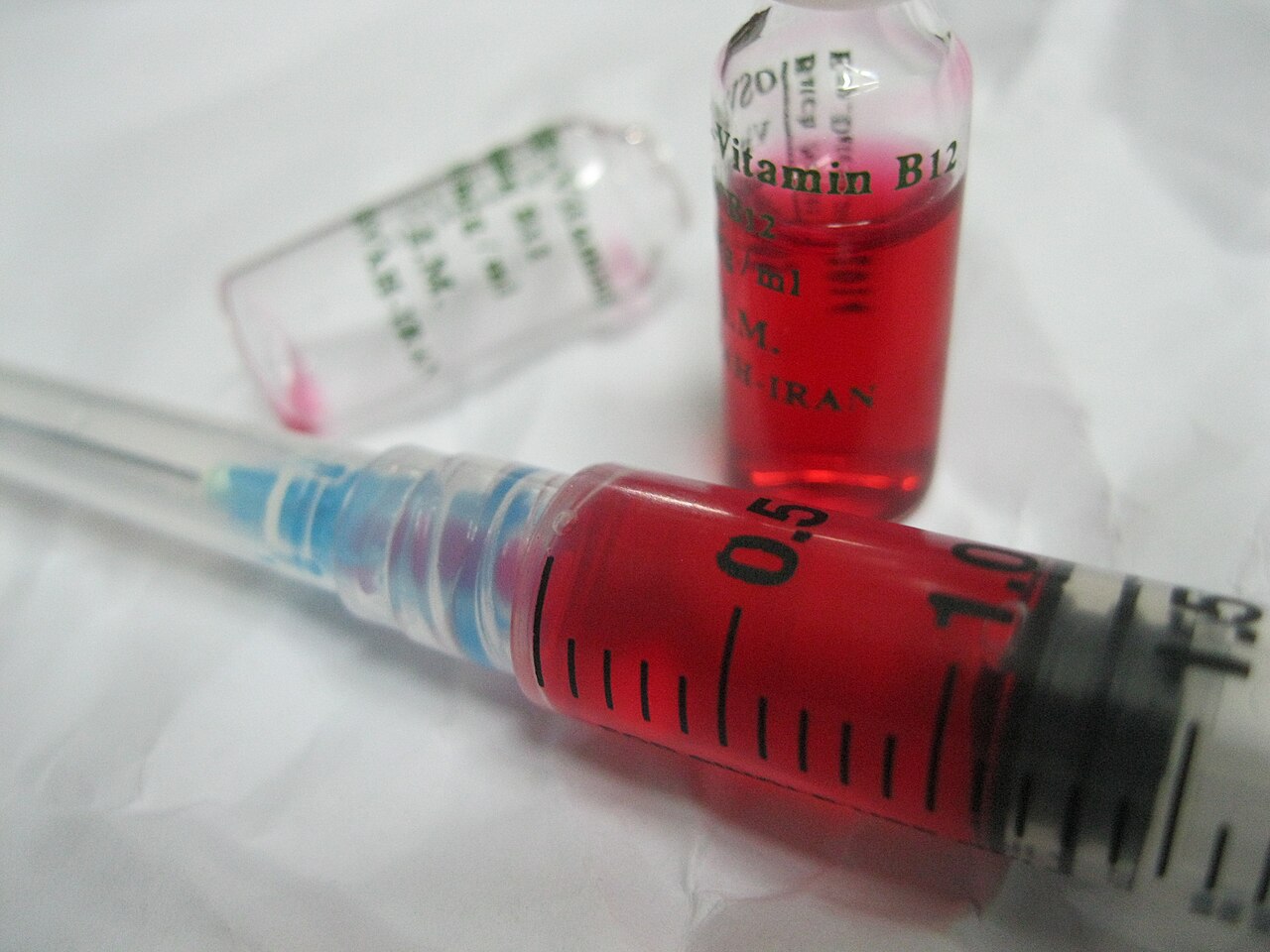
- If the cause is poor absorption, such as pernicious anaemia, tablets taken by mouth may not work, and treatment is often vitamin B12 injections — initially a course over a couple of weeks, then top-ups every few months, sometimes for life.
This is why diagnosis matters: the same low result can need very different treatment. It is also why buying high-dose supplements to self-treat is not advised. They may mask a deficiency or fail to address an absorption problem that needs injections, leaving an underlying issue untreated. B12 itself is generally considered safe even in larger amounts because excess is removed in urine, but that is not a reason to skip proper assessment.
The bottom line
Vitamin B12 is an essential nutrient that keeps your blood, nerves and energy systems working, and it comes almost entirely from animal foods. Most people who eat meat, fish, eggs and dairy get plenty, but vegans and many vegetarians need fortified foods or a supplement, and certain medical conditions can stop the body absorbing it. A deficiency can cause tiredness, a sore tongue, pins and needles and changes in mood or memory — but these overlap with many other conditions. If you are concerned, see a GP for a blood test rather than self-diagnosing or taking high doses on your own.
Frequently asked questions
What does vitamin B12 do?
Vitamin B12 helps the body make healthy red blood cells, keeps the nervous system working properly, supports DNA production and helps release energy from the food you eat. A shortage affects the blood and nerves in particular.
Which foods contain vitamin B12?
It is found naturally almost only in animal products: meat, fish, eggs, milk and other dairy. People following a vegan diet need to get it from fortified foods, such as some plant milks, breakfast cereals and yeast extract, or from a supplement.
What are the signs of low vitamin B12?
Possible signs include extreme tiredness, breathlessness, a pale or slightly yellow tinge to the skin, a sore red tongue, mouth ulcers, pins and needles, problems with balance, and changes in memory, thinking or mood. These can have many causes, so a blood test is needed to confirm.
Should I take a B12 supplement?
If you eat animal products regularly you usually get enough from food. Vegans and some vegetarians do need fortified foods or a supplement. If you have symptoms or are concerned, see a GP for a test rather than starting high doses on your own, as treatment depends on the cause.


Join in — free. Comments on Daily Junction are for members, so real names stay rare and bots stay out.
One field. We email you a 6-digit code — no password needed. Your comment is kept while you do it.
Under 13? You’ll need a parent’s OK first — it takes them one click.