
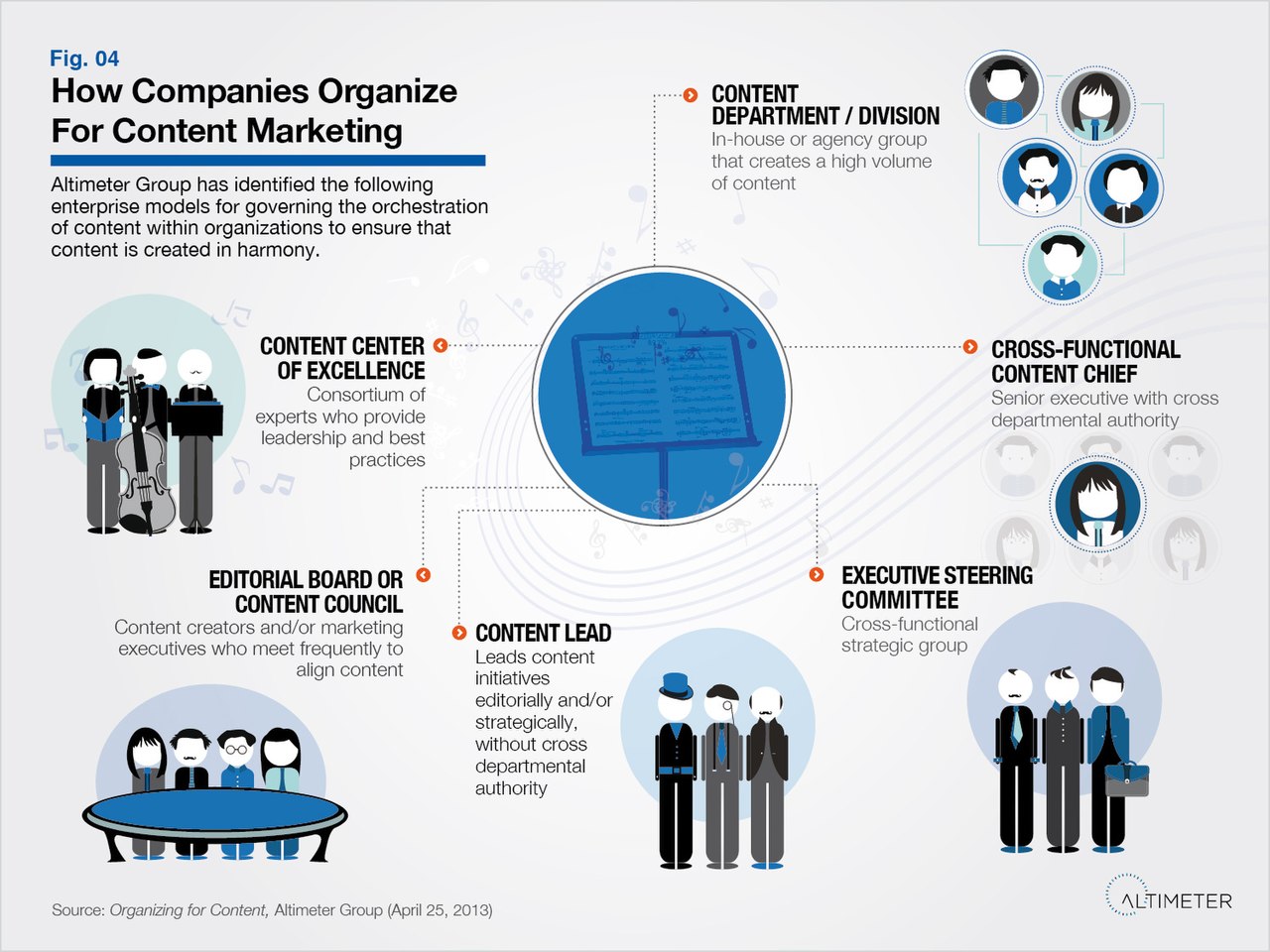
Context: a discipline forced to grow up
Content marketing — attracting and retaining an audience by creating useful, relevant content rather than direct advertising — has matured into a core discipline, but it's been forced to grow up fast by two disruptions. Google has systematically cracked down on the low-value, search-engine-first content that dominated the web for years, and the arrival of generative AI has flooded the internet with cheap machine-generated text. Together, these have upended what works, rendering many old tactics obsolete and raising the bar for genuine quality. Understanding the current picture — what the evidence and the platforms now reward, and what they punish — is essential for anyone who doesn't want to pour effort into content that no longer works.
The data: what Google now rewards
The most important shift comes from Google, whose ranking changes shape a huge share of how content is discovered. Its "helpful content" system, rolled out from 2022 and since folded into core ranking, is explicitly designed to reward content made primarily to help people over content made primarily to rank. Alongside it, Google's E-E-A-T guidelines set the qualities it looks for:
| Google now favours | Google now penalises |
|---|---|
| Genuinely helpful, people-first content | Content written mainly for algorithms |
| Experience and expertise (E-E-A-T) | Thin, keyword-stuffed filler |
| Original insight and credibility | Generic, undifferentiated material |
| Trustworthy, well-sourced information | Low-value 'SEO content' at scale |
E-E-A-T stands for Experience, Expertise, Authoritativeness and Trustworthiness — the signals Google uses to judge whether content is credible. The practical effect is a reckoning for the vast quantity of thin, keyword-driven content produced over the past decade purely to game search rankings.
What's changing: AI raises the bar for humans
The second disruption is generative AI. Since these tools became widely available from 2023, the internet has been flooded with cheap, machine-generated content, much of it generic. Counterintuitively, this has raised the bar for human content marketers rather than replacing them. When anyone can generate passable text instantly, undifferentiated content becomes worthless — the way to stand out is precisely the things AI struggles to produce authentically: genuine expertise, original insight, real first-hand experience, and a distinctive point of view. Using AI to assist with drafting or research can be efficient, but relying on it to mass-produce undifferentiated content is a race to the bottom that Google's helpful content system increasingly punishes.
"AI didn't kill content marketing — it killed lazy content marketing. When machines can produce infinite mediocre content for free, the only content worth making is the kind machines can't: content grounded in real expertise, real experience and a genuine point of view. That's raised the floor and the ceiling at the same time." — a view increasingly common across content marketing thinking, including from the Content Marketing Institute.
What it means for you (content that actually works)
The implications for a business doing content marketing are clarifying. Create genuinely useful content grounded in real expertise and experience, rather than churning out generic pieces aimed at algorithms — this is both what Google now rewards and what differentiates you from AI-generated noise. Treat distribution as at least as important as creation: a common and sound guideline is to spend as much time promoting a piece as making it, using email, social, search, communities and partnerships to get it seen. And measure against business outcomes — leads, sales support, the right kind of brand awareness — not vanity metrics like page views, which feel good but reveal little about whether the content is doing its job. Fewer, better, well-distributed pieces almost always beat a high volume of thin content. Our related guides on why strategy must come before tactics and SEO fundamentals cover the strategic and search foundations, and our piece on social media for B2B covers one of the key distribution channels.
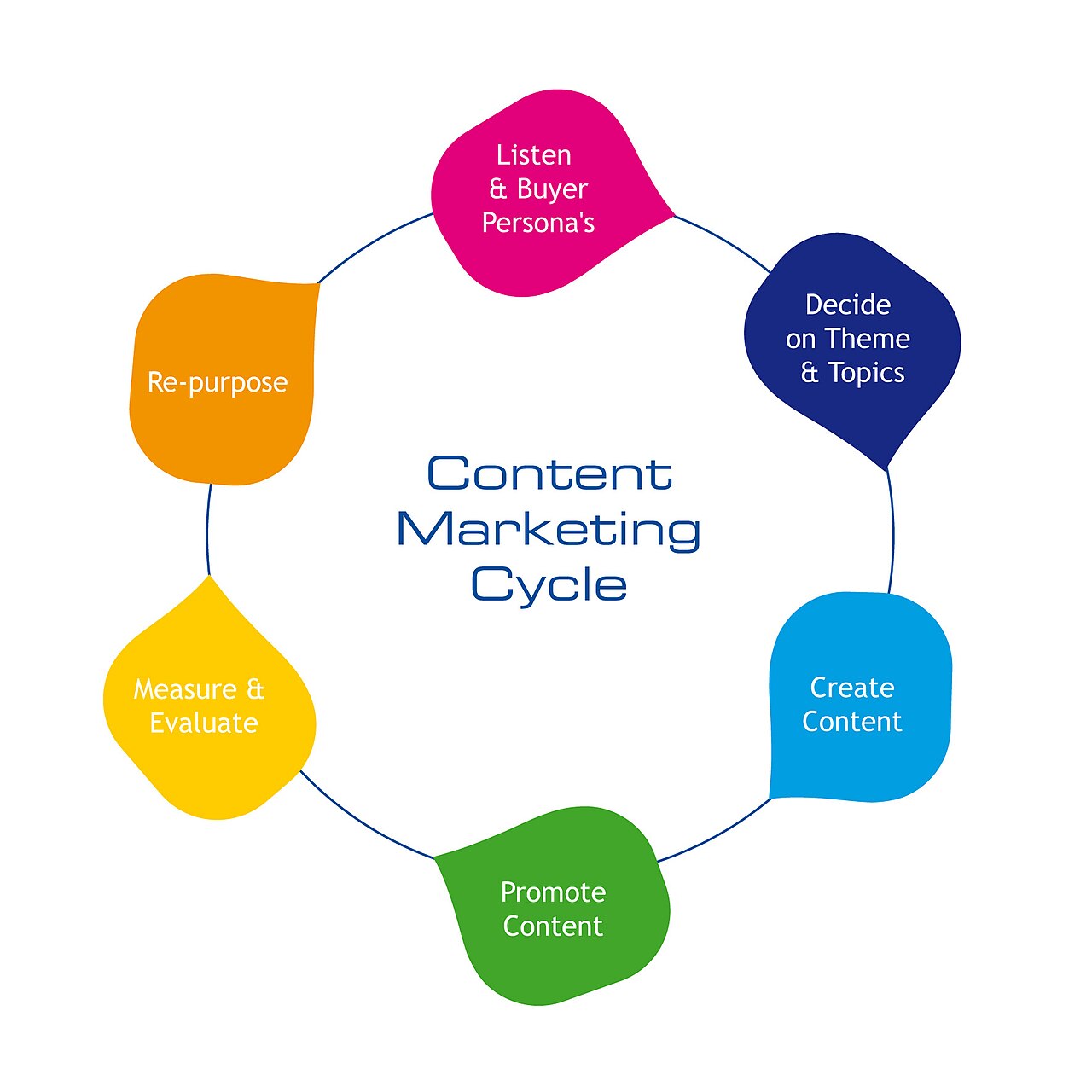
It's worth being clear about what "content marketing" actually encompasses, because it's broader than the blog posts many people picture. It includes written articles and guides, but also video (increasingly dominant, particularly short-form), podcasts, email newsletters, downloadable resources, social media content, webinars and more. The right formats depend entirely on your audience and where they spend attention — there's no universally best format, and chasing whichever one is trendy (a rush to short-form video, say) without asking whether it suits your audience and your strengths is a common waste of effort. The more useful question is: what does your specific audience genuinely find valuable, in what format do they want to consume it, and where do they already spend their time? A B2B software company and a local bakery need completely different content strategies, and the discipline of matching format and channel to a well-understood audience — rather than doing what everyone else is doing — is what separates content marketing that compounds into a genuine asset from content marketing that produces a lot of activity and little result.
What to watch next
Watch how Google's search continues to evolve, particularly its integration of AI-generated answers directly into search results, which could reduce the traffic that flows to websites and force another rethink of how content earns visibility. Watch the ongoing arms race between AI-generated content and the platforms trying to identify and demote low-value material — the equilibrium is still forming, and it will shape what content strategies pay off. And watch the enduring principle beneath all the disruption: content marketing works when it genuinely helps a defined audience and reaches them effectively, and fails when it's created for algorithms or produced without real substance. That fundamental has survived every algorithm change and every new technology, which is why grounding your content in genuine usefulness and expertise — rather than chasing whatever tactic is currently trending — remains the most reliable long-term strategy.
Frequently asked questions
How has Google changed what content ranks well?
Google's 'helpful content' system, rolled out from 2022 and since folded into its core ranking, is designed to reward content created primarily to help people over content created primarily to rank in search engines. Combined with its E-E-A-T guidelines — which emphasise Experience, Expertise, Authoritativeness and Trustworthiness — the direction is clear: thin, keyword-stuffed content written for algorithms rather than readers is increasingly penalised, while genuinely useful, credible, experience-based content is favoured. This has forced a reckoning for the large amount of low-value 'SEO content' that dominated the web for years.
Has AI-generated content changed content marketing?
Significantly. Since generative AI tools became widely available from 2023, the internet has been flooded with cheap, machine-generated content, much of it generic and low-value. Paradoxically, this has raised the bar for human content marketers: when anyone can generate passable text instantly, the way to stand out is genuine expertise, original insight, real experience and a distinctive point of view — precisely the things AI struggles to produce authentically. Using AI as a drafting or research aid can be efficient, but relying on it to churn out undifferentiated content is a race to the bottom that Google's helpful content system increasingly punishes.
Why do people say distribution matters more than creation?
Because content nobody sees achieves nothing, however good it is. Many businesses pour effort into creating content and almost none into distributing it, then wonder why it doesn't work. Effective content marketing treats distribution — through email, social media, search, partnerships, communities and paid promotion — as at least as important as creation. A common guideline is to spend as much time promoting a piece of content as making it. The best content strategy fails if the distribution strategy is an afterthought, which it too often is.
How should I measure whether content marketing is working?
Against business outcomes, not vanity metrics. Page views, likes and shares feel good but don't pay the bills — the questions that matter are whether content generates leads, nurtures prospects, supports sales, builds brand awareness among the right audience, or reduces support costs. This requires connecting content to actual business goals and tracking accordingly, which is harder than counting page views but far more useful. Content that gets lots of traffic but attracts the wrong audience or drives no business result is activity, not achievement.

Join in — free. Comments on Daily Junction are for members, so real names stay rare and bots stay out.
One field. We email you a 6-digit code — no password needed. Your comment is kept while you do it.
Under 13? You’ll need a parent’s OK first — it takes them one click.